My childhood: Between the city and the village
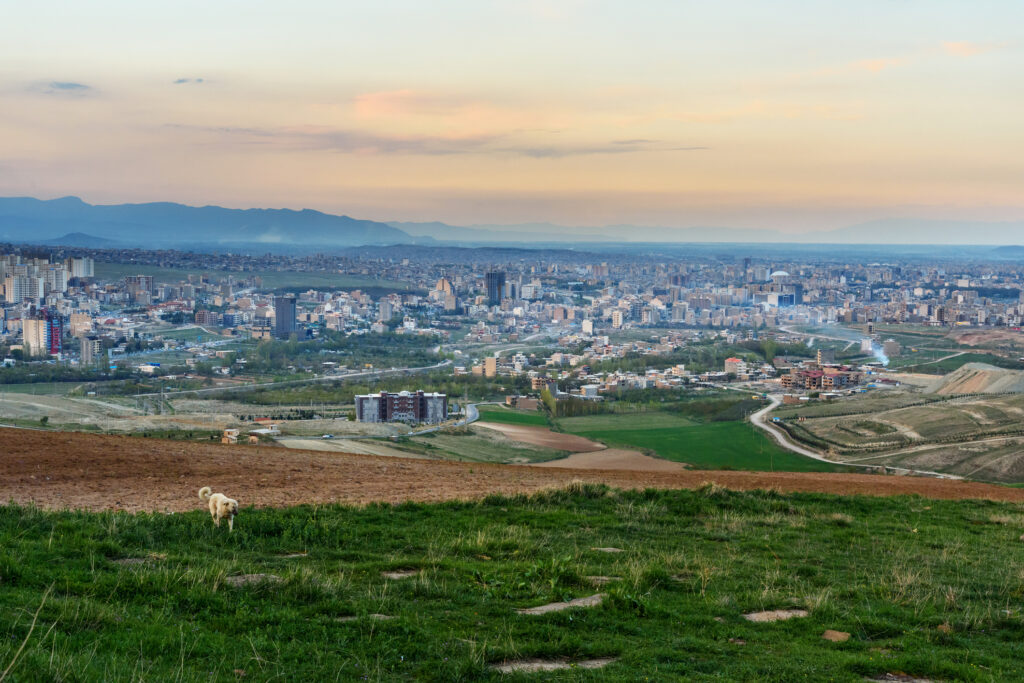
I grew up in Urmia, a city officially known as part of Iran’s West Azerbaijan province but which we, as Kurds, simply call Urmia province. It lies in East Kurdistan, in the northwest of Iran. I was raised in a typical Kurdish family, in a middle-class neighborhood in the western part of the city.
Back then, Urmia looked very different. Today, apartment complexes dominate the skyline, but when I was younger, the city still had its old charm; there were tree-lined alleys, modest houses with wide backyards, and quiet parks tucked between streets. Our house was big. It had four bedrooms and a large backyard where we spent much of our time. It was one of those neighborhoods built in the 1980s and 1990s, the kind that once gave cities across East Kurdistan and Iran their character.
Although I was born and raised in the city, my family’s roots are in a nearby village about eight kilometers west of Urmia, called Nushan. The village sits in a lush valley called Bande in Kurdish. A beautiful region, surrounded by mountains, gardens, and a river that runs into a dam built roughly twenty years ago. Our life in Urmia was between the city and the village, much like many other families in the city. During the summers, we spent most of our time in my grandparents’ village and their garden.
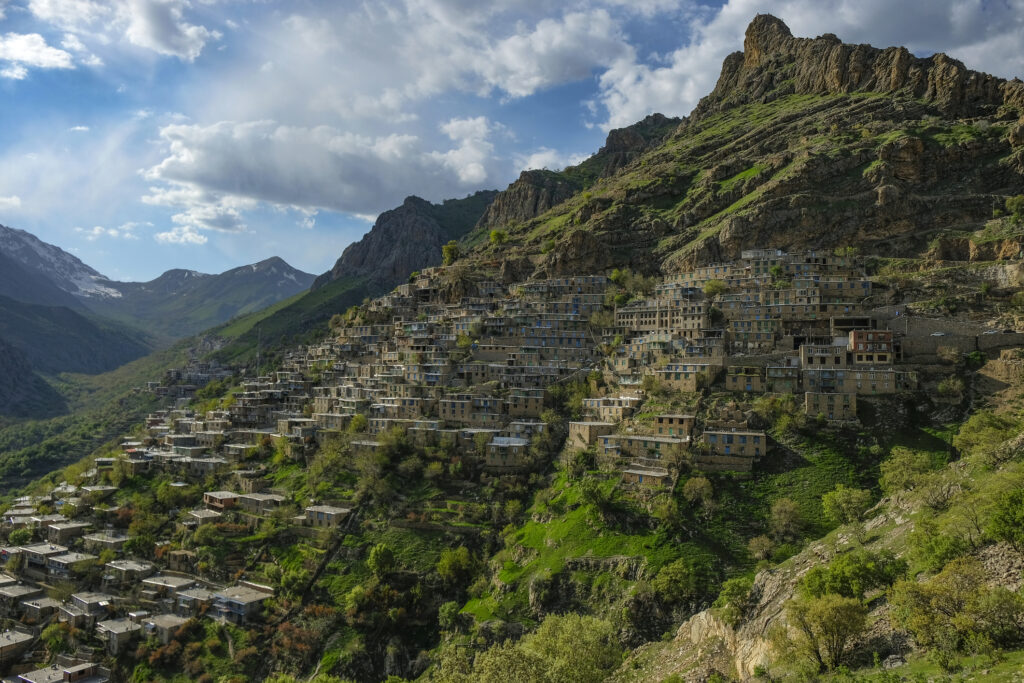
Every summer, I would return there to spend time with my grandparents. Those summers were the highlight of my childhood. The days were filled with laughter, cousins visiting from other cities, and endless afternoons swimming in the river. We would help our grandparents in the orchards, picking apples and vegetables. My grandmother often sang old Kurdish poems as we worked. Those were the simplest and happiest moments I can remember—moments that defined my connection to both my family and the land.
The Hidden Kurdish Identity of Urmia
Many people, both inside and outside Iran, assume Urmia is a Turkish Azeri city. Even now, when I meet someone new, they often ask how I can be Kurdish if I’m from Urmia. That misconception is not accidental; it’s the result of decades of deliberate propaganda and demographic manipulation by the Iranian state.
In reality, Kurds make up more than half of Urmia’s population. Many of the city’s major neighborhoods—such as Gire Cihu (meaning “Jewish Hill”), Badiki, Alwaj, and Tarzilu—are predominantly Kurdish. Yet, our existence has been systematically denied through state policies that privilege the Turkish Azeri population while marginalizing Kurds and other minorities.
Politically, Kurds are nearly absent from positions of power. I once read a study showing that Kurds hold only about three percent of administrative and political roles in the entire province, despite constituting more than half of its population. The rest are dominated by the Turkish population. In the southern parts of the province—cities such as Mahabad, Bukan, and Sardasht—Kurds form the overwhelming majority, yet remain politically sidelined.
I discovered that Urmia once had five synagogues. All of them were destroyed over the years… Today, the result of those centuries of manipulation is clear: a city where Kurdish identity has been erased.
Beyond the city center, the mountainous regions of Mirgewer, Tirgewer, and Soma Bradost are entirely Kurdish, dotted with hundreds of villages. But these communities, like the rest of us, have long been made invisible by both Iranian and Turkish nationalist narratives.
Historically, the region was largely Kurdish, with Armenian, Assyrian, and Jewish minorities. The Turkification of the area began under the Safavid dynasty, when Turkic Afshar tribes were resettled in the region and many Kurdish families from Urmia were forcibly exiled to Khorasan in northeastern Iran, Mazandaran, the Caspian coast, and even Qazvin. This policy of forced displacement continued under the Qajars and the Pahlavis. Each era brought new waves of exile and settlement that diluted the Kurdish presence and reshaped Urmia’s demographic identity.
Today, the result of those centuries of manipulation is clear: a city where Kurdish identity has been erased from the official narrative, even though it still thrives in everyday life.
Urmia has always been a city of many identities—Kurdish, Azeri, Armenian, Assyrian, and Jewish. My own family has Jewish roots tracing back to the western mountains of Urmia, near the border between today’s Yüksekova (Gever) in Turkey and Urmia itself.
Through my own research, I discovered that Urmia once had five synagogues. All of them were destroyed over the years—most during the 1950s. One synagogue remained standing until about fifteen or twenty years ago, when locals began a renovation project, but it was later halted, and now the building lies in ruins.
There was once a thriving Jewish community in the neighborhood known as Gire Cihu, which I mentioned before, renamed by the Iranian authorities to Islamabad. People still call it by its original name, though. It’s one of the poorer neighborhoods in the city now. Most of its Jewish residents were forced to leave. Many emigrated to Israel; others to the United States or Sweden. Only a few remain, and those who do keep their identity private.
Urmia also had large Armenian and Assyrian Christian populations. The Azeri Turks in the city are mostly Shia Muslims, while Kurds are primarily Sunni. There are also small Yarsani communities—followers of an ancient Kurdish faith blending elements of Judaism, Islam, Christianity, and even Buddhism. There are around one to two million Yarsanis across Kurdistan, though not all are ethnically Kurdish. Some also have been “Turkified” over time, particularly in the East Azerbaijan province. Like Bahá’ís and other minority faiths, Yarsanis have been severely persecuted by the regime.
The suppression of diversity in Urmia didn’t start with the Islamic Republic. It goes back to the Pahlavi era, when minority communities were targeted under the guise of modernization and national unity. For example, in the 1950s, during the first waves of Aliyah (Jewish migration to Israel), the Pahlavi government demolished synagogues and Jewish cemeteries. On the road from Salmas to Urmia, there once stood a Jewish cemetery and synagogue—both were destroyed, and a large grain silo was built over them. The remaining land was turned into a marketplace, which still exists today.
This erasure extended to Armenians and Assyrians. When I was younger, I remember a time when Christmas coincided with the Shiite mourning ceremonies of Ashura and Tasua. The regime banned Christmas celebrations, sparking protests among Christians. Many of my Armenian friends and neighbors eventually left the city because life became too difficult. Some emigrated to Armenia, others to the United States—especially to Orange County, California—and many others to Sweden. I also knew several Assyrian families who migrated to Australia for the same reasons.
The regime’s intolerance has often taken a physical form. For instance, the Alwaj neighborhood in northwestern Urmia, which was home to both Kurds and Assyrians, saw its Assyrian cemetery demolished. Many families left afterward.
These patterns—the destruction of sacred sites, the forced migrations, the rewriting of local names—are not isolated events. They are part of a long continuum of erasure, spanning different governments and ideologies. The Islamic Republic simply continued what earlier regimes began.
Even today, Bahá’ís in Urmia, as elsewhere in Iran, live under constant threat and discrimination. Their faith, like the Yarsani and others, exists in the shadows—just as Kurdish identity does in the broader political landscape of the region.
Dreams of Tehran
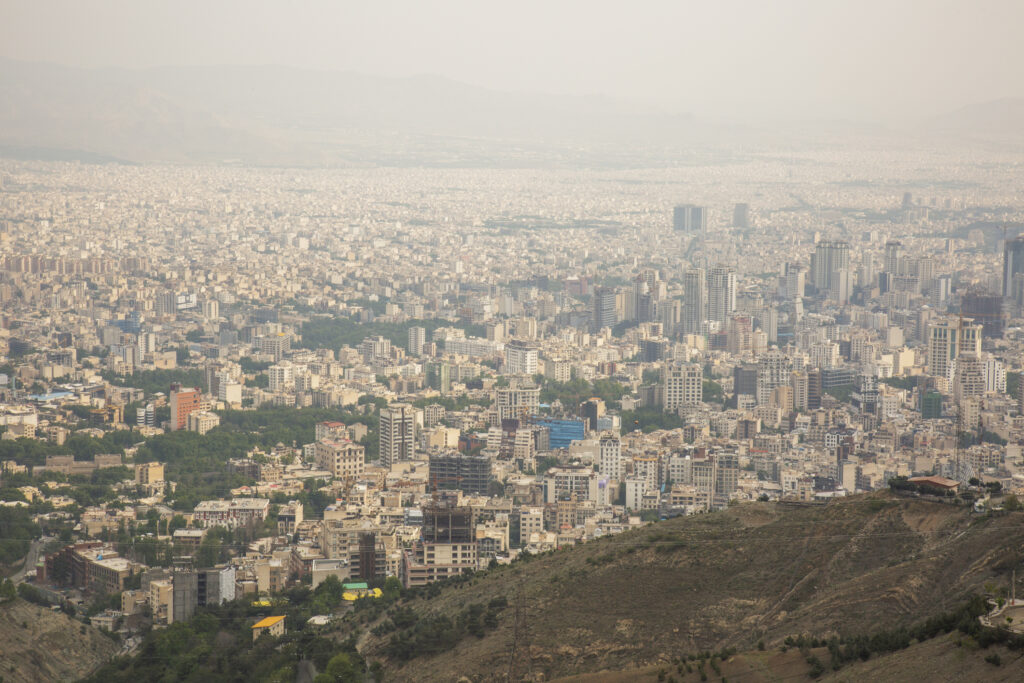
In my family—and for many people around us—going to Tehran meant success. It symbolized a better life, opportunity, and prestige. The capital had everything: the jobs, the business connections, and the modern lifestyle. My uncles lived there, and I always looked up to them. To us, they represented what it meant to be successful. To leave the smaller city behind and start anew in a place where everything seemed bigger, faster, and more advanced.
My uncles and cousins had already carved out lives in Tehran, and our visits were thrilling glimpses into another world. The city’s skyscrapers, sprawling shopping centers, wide parks, and luxury cars stood in stark contrast to life in Urmia. As a teenager, I dreamed about following the same path. I imagined myself living in Tehran, running a business, and building a future that looked like theirs—comfortable, confident, and full of possibilities. Whenever we visited, I was mesmerized by the sheer scale of the city, the endless streets, the tall buildings, the noise and movement, and the shopping malls filled with lights and sounds. Compared to Urmia, where everything felt smaller and quieter, Tehran was like another world. Even the subway fascinated me. It felt like a symbol of progress, something that made Tehran modern in a way that my hometown could never be.
I can’t remember exactly how old I was when I first went there—maybe nine or ten. My uncles had already built their lives in Tehran, and from time to time, my family would visit them. My earliest memory is going with my father to the Tehran Grand Bazaar to see one of my uncles at his store. The bazaar was enormous, like a maze. I remember walking through its crowded corridors with my father, the sound of people, the smell of food, and the constant movement. It was so vast that at one point even my father got lost, asking shopkeepers for directions. It was long before smartphones or Google Maps. People simply had to ask their way through.
That day, my uncle ordered lunch from one of some restaurants. The food was unlike what we ate back home—heavy, rich, and dripping with oil. It wasn’t bad, just different. We also have a bazaar in Urmia, but it was small and quiet compared to this overwhelming world of Tehran’s commerce. My uncles always complained about how unhealthy the food was there—even today, they still prefer bringing homemade meals instead. But back then, for me, everything about that day felt new and exciting. It was a glimpse into a bigger life I wanted to have someday.
My perfect Persian accent
So determined was I to embody this dream that I perfected a Tehrani Persian accent. My teachers often assumed I was a native of the capital. In my mind, assimilation into Tehran’s lifestyle was not just desirable. It was essential preparation for the future I believed awaited me.
I come from a fully Kurdish family. I grew up surrounded by Kurdish language, Kurdish music, and Kurdish food. Everything about my life was Kurdish. But I was taught by a system that made me feel like that wasn’t good enough. A system that quietly, but consistently, told me that to be Kurdish was to be lesser.
So, like many others, I tried to escape that feeling the only way I could: by sounding different. I trained myself to speak perfect Persian, mimicking the Tehrani accent so well that even my teachers couldn’t place me. They would ask, “Are you from somewhere near Tehran? Are your parents working here?” and I would smile, pretending not to be proud of the answer I had long rehearsed: “No, I’m just Kurdish from here.”
But deep inside, I knew why I did it. That accent—the smooth, confident Tehrani sound—was everything. It was the voice of television anchors, pop singers, and successful people. It was the sound of belonging.
I consumed everything Persian: the music, the TV shows, and the movies. I thought that if I wanted to be seen as “cool,” I needed to talk, look, and even move like people from Tehran. That was the culture’s unwritten rule. And I followed it without ever questioning why.
It wasn’t until I got older that I began to understand what was really happening. Watching popular Iranian comedy shows like Barareh, Paytakht, and Nûn-Khe, I started noticing the way they portrayed people from outside Tehran. These shows were supposed to be funny, but they were built on a certain hierarchy, which made the Persian-speaking Tehrani the symbol of sophistication and everyone else the punchline.
For example, Barareh mocked Luri speakers. Nûn-Khe turned Kurdish villagers into comic stereotypes. Paytakht exaggerated the Mazandarani and Gilaki accents to make their speakers seem simple, naive, and uncivilized. And for years, I had laughed along with everyone else. Then one day, I realized how cruel that laughter was. I saw that these shows weren’t harmless fun. They were reflections of a system that mocks diversity while pretending to celebrate it. They painted us, the non-Persian peoples, as uncivilized, slow, and inferior. They made our languages sound like stupidity.
When I began talking with people on social media, I realized it wasn’t just Kurds. The same kind of mockery existed against people from Isfahan, from Ahvaz, and from almost anywhere outside Tehran. A “standard” accent had become a measure of intelligence and respect. And that wasn’t an accident. It was systematic.
Later on I realized that this linguistic hierarchy mirrors something much bigger: a political project of domination. The Iranian regime has built its idea of national unity around a Persian-centered identity, one that forces everyone else to assimilate or disappear. The same dynamic exists in Turkey, where Istanbul Turkish is treated as the “real” language, and anyone speaking differently becomes a caricature—rural, uncultured, and provincial.
Years later, I can still recall those TV shows vividly. And when I look back on them now, they feel more like insults than comedies—not because they were allegedly showing Kurdish life, but because they exposed the reality of how the state and the dominant ethnic group, the Persians, see us.
I always told myself, if there were ever a show that portrayed Kurdish life truthfully, a story about a Kurdish family in a Kurdish city dealing with ordinary things like love, work, and family, that would have been something worth celebrating. But instead, the stories we got were filtered through a lens of ridicule. They weren’t reflections of who we are; they were reminders of how we’re seen.
They painted us, the non-Persian peoples, as uncivilized, slow, and inferior. They made our languages sound like stupidity.
Tehran and the Icepack
I used to buy maps and magazines about Tehran, pepper my cousins with questions about its neighborhoods, streets, restaurants, and cafes, and imagine myself someday driving through nice areas in West Tehran (specifically a quarter called “Bagh-e-Feyz,” where my uncles used to live) in my own car, escaping on weekends to Mazandaran or Gilan.
I was always captivated by the stories my cousins shared about life in Tehran—like casually spotting a movie star in a neighborhood restaurant or discovering the latest craze everyone was talking about, such as a new milkshake introduced by a company called Icepack. The first time I tried one, I was so amazed. When Icepack eventually opened a branch in Urmia, it felt as if a small piece of Tehran had finally made its way to us, and I couldn’t have been happier. The first Ice Pack was always my favorite, especially the banana flavor. Unfortunately, they don’t exist in Germany, but back home it was one of those small joys that stayed with me. I was really obsessed with it, and it was really tasty. When an Ice Pack branch opened in Urmia, it quickly became my favorite place. It still exists, even today. It was one of those trends that started in Tehran and then spread elsewhere, so when it arrived in Urmia, it felt like a piece of the capital had reached us. The branch was located in a place we call Bande, a valley on the western side of Urmia. I remember thinking, Wow, they have this in Tehran, and now we have it here too.
Bande is a beautiful and historic valley, just two or three kilometers from the city. The area is full of gardens, small rivers, and hundreds of restaurants. The valley stretches all the way to our village, which lies near the dam the government built years ago. It’s a popular destination. Everyone who visits Urmia must visit there. It’s a place where you can relax, eat, and enjoy nature; a place filled with life and calmness at the same time.
Expanding business to Tehran
Back home, my parents ran two clothing stores that imported Turkish and other European brands. Because of Urmia’s proximity to the border, our city offered products that were rare elsewhere, drawing even wealthy Tehranis to shop in Urmia’s stores. Watching them being stylish, confident, and cosmopolitan reinforced my belief that Tehranis embodied a superior cultural and modern standard. Yet I was proud, too, that customers often remarked on Urmia’s fashion sense, seeing it as a trendsetter for the capital.
In 2011-2012, my parents expanded their business to Tehran’s Grand Bazaar, putting my older cousin in charge. They opened a store in Bazar-e-Koweytiha, where they sold high-quality jeans made in Turkey. I spent summers there helping out. It was then that I began to see a different Tehran: a city of chaos, pollution, and relentless stress. Beneath its glamour, daily life was expensive, unsafe, and exhausting. It was a city that reeked of smoke and sewage in the canals by the streets, which never stopped roaring, and where everyone and everything seemed to be in a constant rush. You could be stuck in traffic for hours, navigate the subway while wary of pickpockets, or walk the streets with the risk of encountering robbers on motorcycles. My cousins were always warning me to stay alert and keep a close eye on my belongings. Still, weekends offered some relief—strolls in parks, visits to museums, and dinners in uptown restaurants. Sometimes, when I walk through certain streets in Berlin, a faint smell takes me back there. It’s strange—Berlin reminds me of Tehran in some ways. The chaos, the energy, the endless movement of people. The difference is that Berlin feels freer, less suffocating, and more human. Tehran was always under pressure—a place where life moved fast but freedom stood still.
But Iran’s worsening economy, battered by sanctions, corruption, and inflation, soon caught up with us. When international sanctions tightened, inflation spiraled out of control. I remember when one U.S. dollar was worth just 900 to 1,000 tomans, but within a matter of months it had surged past 2,000. The cost of imported goods doubled almost overnight, pushing many items once seen as “luxuries” far out of reach for ordinary Iranians. For business owners like my parents, the crisis was even more suffocating. With Iran’s banking system cut off from the global network, carrying out transactions and purchasing goods from abroad became nearly impossible. Like many others, my parents went bankrupt, closing both the Urmia and Tehran stores and losing almost everything, like many other business owners. With that loss, I believed my chances of ever living the “Tehrani life” I had idealized vanished, too.
When Kobani changed everything
Meanwhile, life took yet another turn. As the battle of Kobani against ISIS unfolded in 2014 and the way it was discussed on social media, I found myself drawn to politics and history, to questions of identity I had never before considered. It wasn’t until Kobani rose against ISIS that I began to see myself not as a future Tehrani, but as a Kurd who needed to understand his people’s story.
When I was younger, I was like most teenagers in Kurdistan and Iran, shaped, without realizing it, by a system designed to make me forget who I was. Even though I came from a deeply Kurdish family that spoke Kurdish, sang Kurdish songs, cooked Kurdish food, and lived with Kurdish values, I grew up in a country that systematically taught me to hate that part of myself. From an early age, the message was clear: to succeed, to be accepted, to be somebody, you had to become less Kurdish and sound, act, and think more Persian.
For a Tehrani or Isfahani, this might sound absurd, but for us, it was normal. We grew up learning that being Kurdish was a disadvantage, even a burden. The state made sure we absorbed that message in school, in the media, and in every layer of social life.
Then, in 2014, everything changed. That was the year of the Battle of Kobanî. By then, social media had begun to reshape how young people saw the world. We finally had access to 3G internet in Iran. Fast enough to watch videos, read news, and connect with people beyond the limits of our geography. For the first time, we could see ourselves reflected in stories outside of state propaganda.
When ISIS began its rampage across Iraq and Syria, the world watched in horror. But for us Kurds, the fight in Kobanî, a small border city in Rojava, or northern Syria, became something much more than a military battle. It was a battle for our existence, identity, and survival.
I remember reading updates every night. The Kurdish defense forces, the YPG and the YPJ, the women’s units, were fighting not just against ISIS but against decades of erasure. Civilians had fled, but these fighters, many of them my own age, stayed to defend the city. Within weeks, Kobanî had become a symbol of resistance, its name echoing across the world, from Kurdish homes across Kurdistan to newsrooms in Europe.
Through Kurdish media like Rudaw and on Telegram channels where people posted and shared news, books, and history, I began to see a world I had never been taught about—my own world.
People were sharing Kurdish history books that had long been censored or forgotten. One of them was Sharafnama, written nearly 800 years ago by the Kurdish historian Sharafkhan Bidlisi. Ironically, it was written in Persian, but what it contained was revolutionary for me. Reading it felt like tearing down a curtain that had been covering my entire life. Everything I was taught in school about Kurds being primitive, disorganized, or dependent on others was all a lie. I found out that we also had a civilization, a culture, and a history as deep as anyone’s. But it was all stolen and changed.
I started to read more poetry, history, and essays. That’s when I discovered the works of Sherko Bekas, one of the greatest Kurdish poets. His words carried both beauty and pain, and one of his poems struck me more than any other. It was about how “Tehran doesn’t smile at anyone,” which goes like this:
Tehran Does Not Smile at Anyone
Tehran—Its scarf caught on the branches, its cloak cast across the water, its robe stretched upon the road, and its turban left upon the garden wall.
With great effort, it has tied its beard to a song. Clothed Ashura in poetry, turned mute music into a cry, and made life itself a question.
Tehran—It does not smile at anyone, not even with death. It finds no joy in anything, not even in dying.
Its women, its sons, and its daughters—all bear the same name: Death.
And from that place, life will never be born.
For me, this poem revealed the true face of Tehran. A city I had once imagined as vibrant and full of promise instead appeared as a place shrouded in darkness and misery. It was a lifeless metropolis, draining energy, joy, and resources—not only from Kurdistan but from countless other corners of the country as well.
It was the beginning of my awakening that to truly know myself, I had to reclaim what had been taken from me: my language, my history, and my being as a Kurd.
As I delved deeper into Kurdish history, my imagination of Tehran began to collapse. I discovered that the capital, the very city I once dreamed of, had long been a center of policies that oppressed my people. It was a city where politicians and rulers passed laws that banned my mother tongue and denied my identity as a Kurd—laws and verdicts that led to the killing of countless innocent Kurds. It was the city where both the Pahlavi dynasty and Ayatollah Khomeini justified the mass repression of Kurds and other minorities. It was also the city where most of Iran’s wealth was concentrated, while the rest of the country was left to struggle in poverty and despair. For me, Tehran was no longer, in my eyes, a place of skyscrapers and fashion. It had become the seat of power where decisions were made that not only suffocated life in Kurdistan but also cast a shadow over the entire region.
It wasn’t just the politicians and their corruption that made me resent the city—it was the way it was built, the way it seemed designed to exclude and oppress certain groups. Every time I went back, I noticed more of it. What struck me most was how Afghan refugees and migrants were treated on the subway, in buses, and in the streets. They were looked down upon, spoken to harshly, and ignored as if they didn’t belong and were not humans.
Most of the people doing the hardest, most exhausting work in the bazaars—hauling heavy goods, cleaning, lifting, and carrying—were Afghans or Lurs. It was painful to see how invisible they were, how their labor kept the city running while they were treated with such disrespect. I couldn’t stop asking myself why. Was it just because they were Afghan, because they had no rights? Or because they were Lur and faced systemic discrimination like so many others in Iran?
These questions stayed with me. Over time, they turned into anger—an anger not just at the government, but at the entire structure of the city. I began to hate going back there, avoiding it whenever I could, except when I had no other choice—like for medical reasons. The city I had once idealized transformed into a symbol of inequality and injustice. Just as Sherko Bekas wrote in his poem, Tehran became for me a city that killed joy, stifled humanity, and turned life itself into mourning.
How I left Kurdistan: My last trip to Tehran
At 28, already living in exile in Germany because of my years of human rights activism, journalism, and cooperation with human rights organizations, I ultimately had no choice but to flee and seek safety in Europe. I had to pass through Tehran one last time in 2024 before fleeing the Iranian regime. That day was marked by fear, anger, and sorrow. Hugging my family for what I knew might be the last time, in Khomeini Airport on the city’s southern edge, I carried the heavy realization that Tehran itself was partly to blame for my departure from my home and the people I hold dear. But this flight itself has a long journey, as everything in one’s life is interconnected.
In Iran, every man is required to serve in the army. I graduated in 2020 with a degree in civil engineering, but the university never gave me my diploma. Around that time, I began the process of applying for a military exemption. I have an eye condition called keratoconus, and I already knew that this condition would qualify me for exemption. But as a Kurd, I faced constant obstacles. The authorities made the process as difficult as possible, not only for me but also for many of my Kurdish classmates. The bureaucracy was exhausting. The university was supposed to issue a letter that I could present to the military service organization to begin the exemption process, but they kept refusing to provide it. I had to fight for that document for a long time before finally getting it.
When I submitted my file to the military office, they referred me to a medical committee for examination. I had already undergone surgery on one of my eyes, which should have been enough to confirm my exemption. But the doctors in Urmia claimed they couldn’t verify whether the operation was real. They sent me to another specialist in the city, who examined me and confirmed that I indeed qualified for exemption. Still, they refused to accept it.
Eventually, they sent me to Tehran for further evaluation. I don’t remember the name of the hospital—only that it was a military one in the city center. I had to stay there for two days while they ran several tests and wrote long reports. They finally told me that they would send the results back to Urmia. After nearly two months, I received a message on my phone confirming that my exemption had been approved. They asked me to bring photos and documents so they could issue the exemption card. With that exemption card, I was finally allowed to apply for a passport.
By then, I had already decided that I needed to leave Iran. I first tried to find a legal way, like applying to universities abroad, especially in Australia, which seemed like the most accessible option at the time. But the process was slow, and I couldn’t wait any longer. The fear of being arrested due to my political activities was always there, following me everywhere.
Urmia, being close to the Turkish border, has long been a passageway for people trying to flee Iran—Afghan refugees, Iranian dissidents, and many others seeking safety or a better life in Europe. Eventually, I spoke to my father, and he introduced me to some people he knew who were involved in smuggling routes across the mountains. It was dangerous, but it felt like my only way out.
I was lucky. My uncle, an electrical engineer who was working on a project for someone, happened to overhear a conversation about the owner of the project helping people leave Iran for Europe. Knowing how desperate I was to get out, he approached the man. The smuggler claimed he could take me to Europe—not through the mountains or the sea, but by plane. My uncle trusted him, and I decided to do the same. A few days later, the man messaged me on WhatsApp, asking me to bring all my identification documents to his office in the city. He told me to wait two weeks. It sounded unbelievable, but everything moved fast. He arranged a fake Ukrainian passport and gave me detailed instructions for the journey.
Ten days later, he told me to book a flight from Tehran to Vienna. I traveled to the capital for what I knew would be the last time. It was winter, and Khomeini Airport felt both vast and suffocating. The man met me there and walked me through every step—what to say, what not to say, and how to act at each checkpoint. Somehow, it all worked. The security officers didn’t ask for my real passport. At the boarding counter, I handed over a small piece of paper marked with a cross, and they gave me my boarding pass without a question. It was as if the entire system had been paid to look the other way. The flight from Tehran to Doha was smooth, though I was terrified. I sat quietly, ordered an iced coffee during the layover, and tried to calm myself before boarding the next plane to Vienna. When I arrived in Austria, no one asked a single question. They scanned the passport—it worked—and waved me through. Within hours, I was on a train to Germany, where friends had booked me a room. For the first time in my life, I could breathe. Looking back, I still can’t believe how easily it all happened. Maybe it was luck, or maybe it was a system built on money and connections. Either way, it was the end of one life and the uncertain beginning of another.
Today, Tehran is no longer my dream city. It is a dark, polluted metropolis in the heart of the Middle East, where joy has been suffocated and where life, for me and for so many others, has been systematically denied, a place I would never want to go back to.