The Zan, Zendegi, Azadi movement showed that Persian and non-Persian, Kurd, Baluch, or any other ethnicity in Iran, are all actually on the same side.
I haven’t lived in Tehran, and I’ve never traveled there either. But in my mind, Tehran is this huge city… full of traffic, crowds, and pollution. The first thing I picture is the air pollution—I’ve seen so many images and heard about it non-stop in the news. I imagine it’s much bigger than the city I’m from. Maybe with taller, more beautiful buildings.
And like most big cities—whether it’s Tehran, Istanbul, or anywhere else—I feel like people are a bit colder there. More distant, less warm; not as close-knit as in smaller places, like in Kurdistan. It’s not like Sanandaj, where whoever comes to the city is welcomed with warmth. People talk to you, help you, and make you feel at home right away.
I’m from Sanandaj. It’s a really beautiful city. And I’m not just saying that because it’s my hometown. It genuinely is a beautiful place with a lot to see. The most famous is Mount Abidar—everyone knows Abidar. It’s such a lovely spot, and nearby you have the Gheshlagh lake and the dam. There are great viewpoints and historical places as well. We have some really nice old villages around Sanandaj too but Abidar is definitely the highlight. And the people there are warm and friendly. They’re very cultured and hospitable.
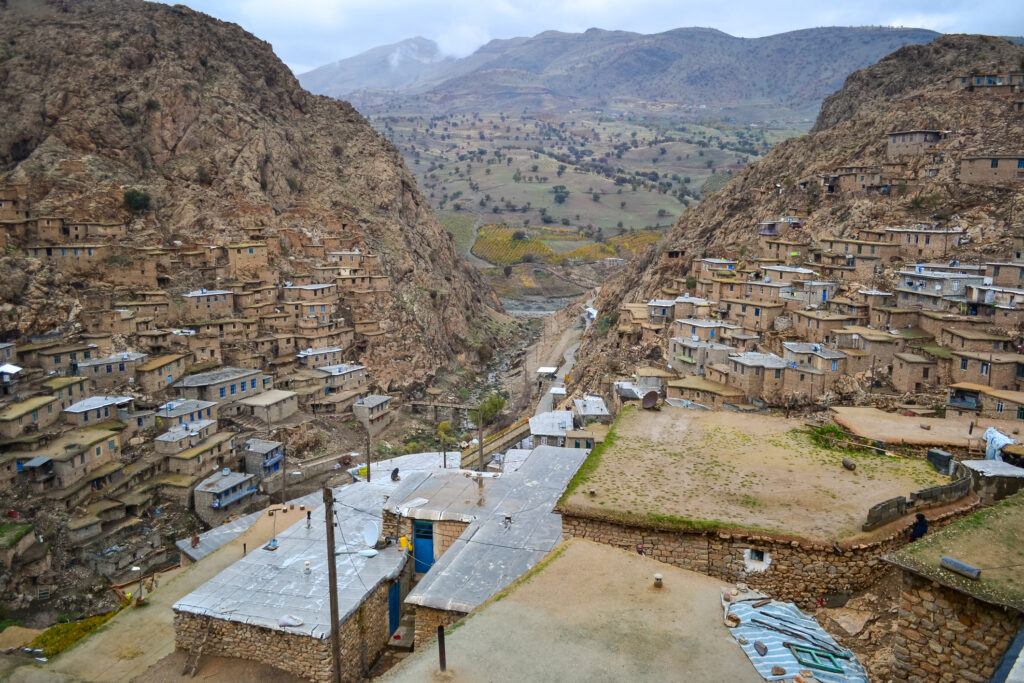
You can visit places like Palangan village and Uramanat—there are so many beautiful spots to see there. We went to Uraman once. Someone from the village was so kind that they insisted we stay the night at their home. We were not friends or acquaintances. We had gone there as tourists, and it was literally the first time we met them. But they treated us so well that we ended up staying over, having dinner with them. Honestly, they were incredibly gracious hosts. They welcomed us into their home like we’d known each other for years.
I’ve been to Kermanshah as well, but I didn’t get that kind of experience there. It wasn’t like that. I had imagined Kermanshah would be like that too, but when I went, it wasn’t. I think the most hospitality I’ve seen in the whole Kurdistan region was in Uraman.
I’ve met tourists from Tehran before. There’s a waterfall in the Uramanat region. We went there once with a few of my friends. We usually wore Kurdish clothes, but that time we went in manteaus. There was a family of four from Tehran there too: a tall couple with their two kids. You could tell right away they weren’t local. Most of the men there were wearing Kurdish clothes, so it was easy to spot who was from Kurdistan and who had come from another city. They connected with us pretty quickly and started chatting. We were the only ones who could talk to them [in Persian]. They were very warm and friendly.
I would’ve loved to visit Tehran, but I never wanted to live there. I don’t know why. I just never wanted to move to Tehran. Maybe it was mostly because I was really attached to my family. They were in Kurdistan, and even when I got accepted to a university in another city, I didn’t go. I stayed in Kurdistan for university. I was honestly very attached to my family.
I studied law at university. I’m not someone who likes getting into religious discussions or distinctions at all, but I grew up in a place where it’s part of life. At university, right at the start, our professor began teaching a section on the conditions someone has to meet to become president. One of them was that the person has to be a man—so that already ruled us out. Then he said they have to be Shia—and we were Sunni.
These things didn’t really matter to me personally, but every time they gave me a form to fill out, it always asked: Shia or Sunni? I had to check “Sunni.” There was no option not to—you had to answer it. So I asked the professor, “What does that have to do with anything? You mean if someone is Sunni, they can’t become president?” He said, “Well, it’s based on Islamic law. They have to be a Twelver Shia.”
It’s not like I wanted to become president, but it still felt discriminatory to me. And it’s not just about my own experience as a Kurdish girl; I’ve heard things from others and seen things myself.
I’ve always been adventurous. I’m the kind of person who constantly needs something going on in my life, some excitement. Back in school, I was really interested in learning how to read Kurdish, because we have such beautiful poetry and Diwans (poetry books). My mother herself had memorized these poems and would recite them to me. I couldn’t read Kurdish from a book. I always wished that alongside Persian, which is the official language we are taught, they would also teach us our own Kurdish language at school.
It wasn’t until I was in seventh grade that one of my dayis (maternal uncle), who knew [how to read] Kurdish, finally taught me the Kurdish alphabet. I was bilingual, yet I still couldn’t read or write in my mother tongue. To me, that is a form of discrimination. Imagine—up until seventh grade, I couldn’t even write my own name in Kurdish. After I learned it, one day at school someone reported me, saying I was being a troublemaker.
It was around the time when Farzad Kamangar, who was a teacher, had been executed. We made some noise about it and wanted to know why they (authorities) had done that. I was living in the school dorm at the time. They (agents) came into the dorm and took every Kurdish book I owned. My Kurdish books were poetry books. None of them were political. I also had Persian books that did contain political content, but they didn’t take those. They only took my Kurdish books, and I never saw them again.
One of those books was a gift from a friend of mine who had sadly passed away after suffering kidney failure. I was heartbroken about that book in particular. I kept thinking: why couldn’t they have at least left that one for me? They confiscated all of my Kurdish books.
When my brother was in second or third grade, I went to his school for a PTA meeting because my mom and dad were traveling at the time. During the meeting, I suggested that I could come in the afternoons and teach the kids [how to read and write] Kurdish.
I made the suggestion because I had learned Kurdish with so much difficulty myself. All the parents were really happy about it and said it would be great if it could happen. We even spoke with the principal. He said, “I personally don’t have a problem with it, but we need to get a permit from the Ministry of [Culture and] Islamic Guidance.” I said, “Is that really necessary? Why should I have to go there?” He said, “Under no circumstance are you allowed to teach until you get that permit.” I said, “Fine, okay.”
Well, I went back and forth so many times. The kids—my brother’s friends—would ask every single day, When is she coming? When is she coming? In the end, they just wouldn’t allow it.
So, at my own expense, with my own money— and I was a university student at the time—I went and made booklets for them. I would download materials from Telegram—I’d search for Kurdish alphabet and language booklets, then take them to the internet café to get them printed for the kids. Just imagine.
The kids would come to our house. Just imagine. I had made 8–9-year-old kids promise not to tell anyone they were coming to our place to learn Kurdish, so I wouldn’t get in trouble. It was just a small group, kids my brother’s age. They promised they wouldn’t say anything at school.
Sometimes, when people noticed they were coming to our house too often, they’d say, “She teaches us math, she helps us with our schoolwork.” Since my brother was at the top of his class, they’d say, “She’s tutoring us in math,” and things like that.
That’s how I taught those kids Kurdish. For about three or four months, they’d come over two or three times a week. Then summer break came, and some of them didn’t stay in town. They went to [their] villages or to other cities. But in that short time, they learned how to read and write Kurdish.
Actually, some of them found me on Instagram recently and messaged me. Their Kurdish writing was really, really good. And they call me ostad (professor/master)!
Kurdish people experienced discrimination and repression even before the Islamic Republic— and it continued after the Islamic Republic came to power. Kurds actually boycotted the referendum for [the establishment of] the Islamic Republic, and that’s why Khomeini issued the call for jihad against the Kurds.
For as long as I can remember, I’ve heard about how, after the revolution, Khomeini ordered jihad against the Kurds, calling them koffar (infidels) and telling people to go and fight the “infidels.” I have heard there was a horrific massacre in Sanandaj… that Kurdish [political] parties who opposed the Islamic Republic were targeted but that ordinary civilians were killed along with them. They stormed in and massacred civilians. I’ve heard hundreds of people were killed.
Those who remember it still recount it or write about it. This atrocity has only survived through the memories of those who witnessed it. It was never covered by the media for us to understand the true scale of how horrific it was. It wasn’t like today, where we have the internet and things like that.
Because honestly, they hadn’t left [people] a choice. They [Islamists] overthrew the monarchy themselves, and they brought an Islamic regime themselves. They really took advantage of people’s religious sentiments at that time. People didn’t think this would be the new system [replacing the monarchy], especially since Khomeini had said, diplomatically, that he would separate religion from politics, that “we will have nothing to do with politics.” That’s exactly what he said and people were duped.
But because Kurds had already experienced discrimination and repression [under the Shah], Kurdish political leaders at the time said, “We will sit down with you, but you must write our rights into the constitution right now. Give us our rights; this is what we want.”
So when they said Khomeini has said the choice was either the Islamic Republic or the monarchy, and later claimed 98% of people voted for the Islamic Republic, Kurds had boycotted the referendum entirely. Not even 1% of Kurds voted.
Iran is a country with many ethnicities, a lot of diversity, and different languages. If that isn’t managed properly—if people don’t have their rights—this is what happens. Right now, Kurds are facing intense repression, so they naturally push back.
People who haven’t experienced this repression may not understand it, but those who have know that they have to stand their ground and say, “As long as you keep hitting us, we’ll keep pushing back.”
Before [Woman, Life, Freedom], they had created this image of Kurds as violent people. That they kill, that they behead others. My own brother, who lives in Isfahan, once told me that he got into a taxi and his phone rang. He answered it, and after he hung up, the taxi driver asked, “Are you Kurdish?” He said, “Yes, why?” The driver replied, “If I had known, I wouldn’t have given you a ride. They say Kurds behead people.”
This was the kind of image they had spread about Kurds everywhere. And honestly, unless someone actually spends time with Kurds, they don’t truly know them.
Of course, nowadays many Kurds live in Tehran and other cities. Because of the economic situation, many move to bigger cities for work, to study, or for other reasons—and they’ve integrated into society. So maybe now, people know them better.
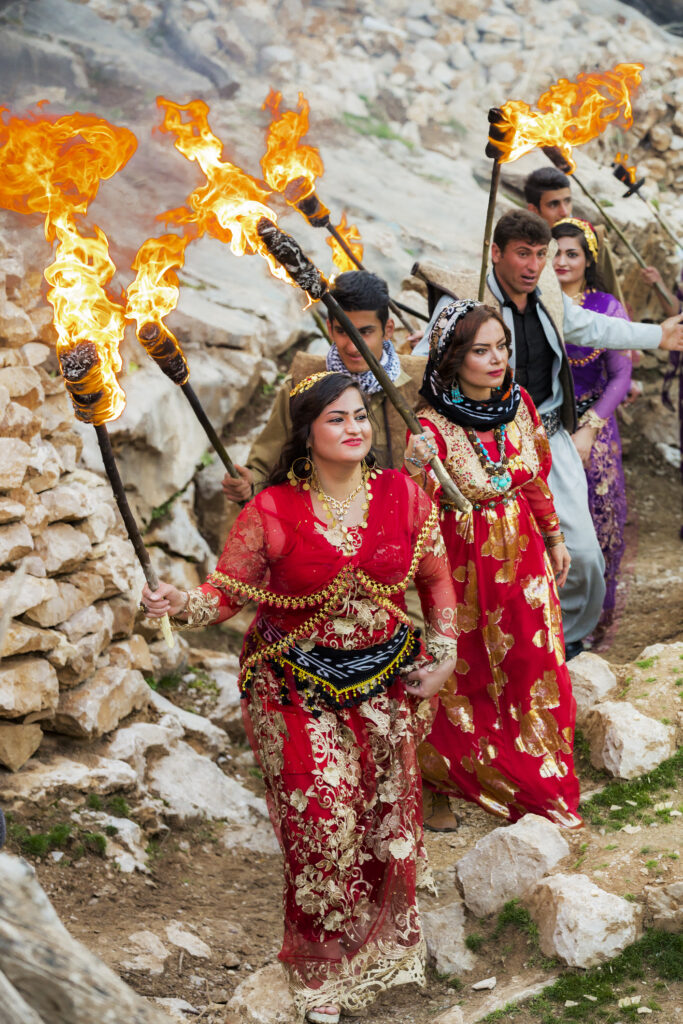
But when the Zan, Zendegi, Azadi movement happened—it began in Kurdistan. People finally understood that it was the Kurds who started it. From the footage they were seeing, and through that sense of solidarity [that spread across the country], people realized that all those negative stereotypes about Kurds had been lies—that Kurds were genuinely fighting for their freedom and their rights.
I think people finally recognized the legitimacy of this struggle that has existed for hundreds of years. Iranians understood that the Kurdish struggle is truly legitimate.
I was working as a freelance journalist in Erbil when it happened. People were sending me tons of videos, and I was publishing all of them. Because I was sharing so many videos and news about the protests, the Islamic Republic threatened us in Erbil, and we had to leave and go to Turkey.
Back then, any video that came to me, I posted without making any distinction. Whether it was from Tehran or any other city, whether someone had been executed or killed on the streets—it didn’t matter. It was no different from someone being killed in Kurdistan. For us, it was the people losing their lives out on the streets. We knew who the enemy was; we stood with the people, and our problem was only with the regime.
Honestly, the feeling I had when I saw videos from Kurdistan was exactly the same as the feeling I had for videos from Tehran and other cities.
There are basically two fronts now. We don’t really have “neutral” or “non-political” people anymore. Even if someone claims they’re not political, even if they don’t want to be, when you’re living in Iran today there are only two sides: you’re either with the people or with the government. Anyone living in Iran, their side is clear: you’re either with the people or with the regime.
It was the Zan, Zendegi, Azadi movement that really showed that Persian and non-Persian, Kurd, Baluch, or any other ethnicity in Iran, we’re all actually on the same side. It’s the government that creates division. It’s the government that isn’t with the people. There’s no problem between the different ethnic groups in Iran. The problem is the regime itself.
This whole policy that treats [people from other ethnic groups] as second-class or third-class citizens the moment they say “I’m Kurdish” or “I’m Baluchi”…[needs to change]. If Kurds had their full rights—what they’re asking for, their right to self-determination—they could definitely coexist.
What’s important to me is that there is democracy in Iran; that there is no difference between the people of Kurdistan and those in other parts of Iran.
That, in my opinion, would be much more beautiful. Then there would be no talk of a separate Kurdistan or of the system falling apart. Just that there is democracy for everyone in Iran, that’s all.