
Housing construction stalls, purchase prices climb out of reach for many amid Iran’s war-struck economy.
For decades, Iranians saw the real estate market as a safe haven for their investments. Unlike liquid assets such as stocks and foreign currency, whose value is especially difficult to predict in the Islamic Republic, where political and geopolitical crises routinely reshape market expectations, property prices in the country long appreciated at a steady rate. That changed last summer, when the 12-day war with Israel caused a general panic. Investors shifted their capital toward the gold and currency exchanges, while demand in the housing market plummeted.
“Real estate buying and selling came to a near standstill, and many construction projects were either halted or slowed down,” Rasoul Ghorbannejad, CEO of Saba Naft Engineering, recently told the state-aligned Tabnak news site. “The volume of property listings across Tehran dropped by about 95 percent.”
While construction activity rebounded temporarily later in the year, the on-again-off-again war that began on February 28 has imposed new constraints as the government extracts additional taxes and fees from the real estate sector to prop up the country’s faltering economy. In combination with the escalating costs of building materials and utility hookups, new housing construction has dropped precipitously as prices soar.
Mohammad, a semi-retired doctor who lives in north Tehran with his wife and their two children, had been hoping to downsize. The family currently owns and occupies one floor of a five-story building with a footprint of around 250 square meters (2,700 square feet), in a condominium-style arrangement. Mohammad listed the home just before the outbreak of war this year radically altered the market.
“I wanted to sell this place and buy two smaller units, one for us and one for the kids,” he says, “but we haven’t been able to find a buyer because property values have risen so much, even though this property is in a relatively good area and could be used for either commercial or residential purposes.” Months have passed with little prospect of a sale. Mohammad concludes, “The situation is even worse now.”
Property developers attribute the construction sector’s stagflation to a combination of eroding household purchasing power, rising building costs, and war-related risk aversion. In Tehran, prices have surged by 80 percent year-on-year, while the government reports a 12 percent jump tied directly to the ongoing conflict. As a result, the cost of homeownership has become too high for the kindred support networks that traditionally financed it. “In the past, young people could rely on financial help from their families to buy a home,” says Mohammad. “But now families are struggling too and can’t help.”
A major factor behind the recent price hikes are supply-side pressures on developers, who face a crippling cost burden for new housing starts. Nationwide, the construction cost of a five-story building like the one in which Mohammad and his family live now exceeds 50 million tomans per square meter (approximately $26 USD per square foot), an increase of at least 30 percent over the past year, according to state-aligned economic daily Donya-e Eqtesad. Electricity charges for construction operations have more than doubled in that span.
Taxation models have also shifted. Developers now pay 25 percent of project profit as tax, a far higher outlay than the previous flat fees. Additionally, the Social Security Organization, a channel for off-budget funding of the Islamic Republic’s security apparatus, collects 27.5 percent of municipal charges as cash insurance premiums. In some regions, developers of projects exceeding 200 units are further required to build schools.
Meanwhile, labor and materials are increasingly scarce. The mass deportation of Afghan workers following last year’s 12-day war sparked rising wages in the construction sector. Energy rationing has further impeded production, as cement factories face an 85 percent power curtailment during the summer months. Major facilities like the Mobarakeh Steel complex, a target of air strikes early in this year’s war, are operating at severely reduced levels, with steel industry executives warning that output is on track for barely 30 million tons of the country’s installed annual capacity of over 50 million.
Halted momentum and hidden players
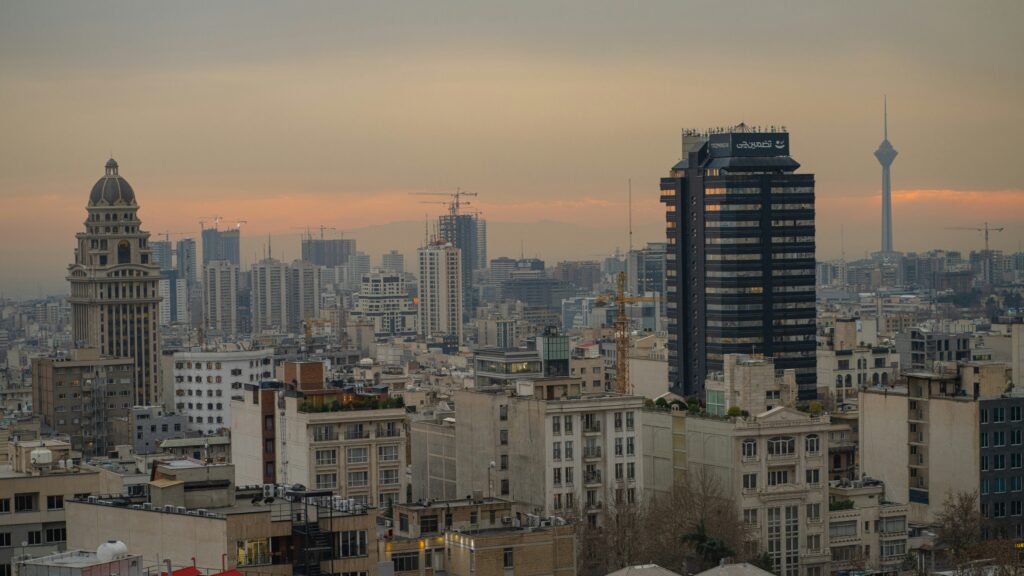
The impact of these pressures is clear in the capital, where average housing prices rose by about 80 percent between January 2025 and June 2026, according to Touraj Sarbaz, a member of the Realtors’ Union board of directors. The impact is no less apparent in areas just outside the city, where house prices increased by nearly 100 percent, according to Ghorbannejad. Developers attribute the gap to the declining purchasing power of urban residents, which has pushed demand outward into cheaper suburban markets, accelerating price growth there.
Before the current war with the US and Israel, the real estate market was showing signs of a revival, with rising buyer inquiries and increased listings in many urban districts. However, the outbreak of war brought that momentum to a halt and effectively froze market activity.
Banks have also emerged as “hidden players” in the housing market, exacerbating a decline in public confidence. In December 2025, Samaneh Moharrami, vice president of the Realtors’ Union, described Iranian banks as wielding outsized influence through their often non-transparent control of properties acquired through repossession and other means. Because so many bank transactions are opaque, they can manipulate recorded comparables and valuations. They can list properties above established comparable standards, and because they control a substantial share of sales, those asking prices become the new benchmarks. Favoring speculation over expeditious liquidation, banks have also been holding repossessed properties off the market, reducing supply while their holdings appreciate in value. “As key players,” said Moharrami, “banks must be held accountable to curb such profiteering.”
Moharrami’s observations were echoed this June by real estate consultant Touraj Sarbaz, who noted that banks exploit market fluctuations to funnel liquidity into real estate through intermediaries. This practice has further inflated prices and intensified volatility within the sector.
Analysts agree that a housing market recovery hinges on restoring public confidence and stabilizing the broader economy. With household wealth often diversified across gold, foreign currency, stocks, and vehicles, potential buyers are waiting for signs of predictability before committing to property purchases.
“Once the economy stabilizes, individuals can make informed decisions about consolidating those assets to purchase a home,” said Mansour Gheybi, founder and CEO of Damico Real Estate. He cautioned against expecting an immediate rebound even if the war ends for good in the coming months, describing the return of market confidence as a gradual process unlikely to produce significant results in the short term.
Tehran’s growing property divide
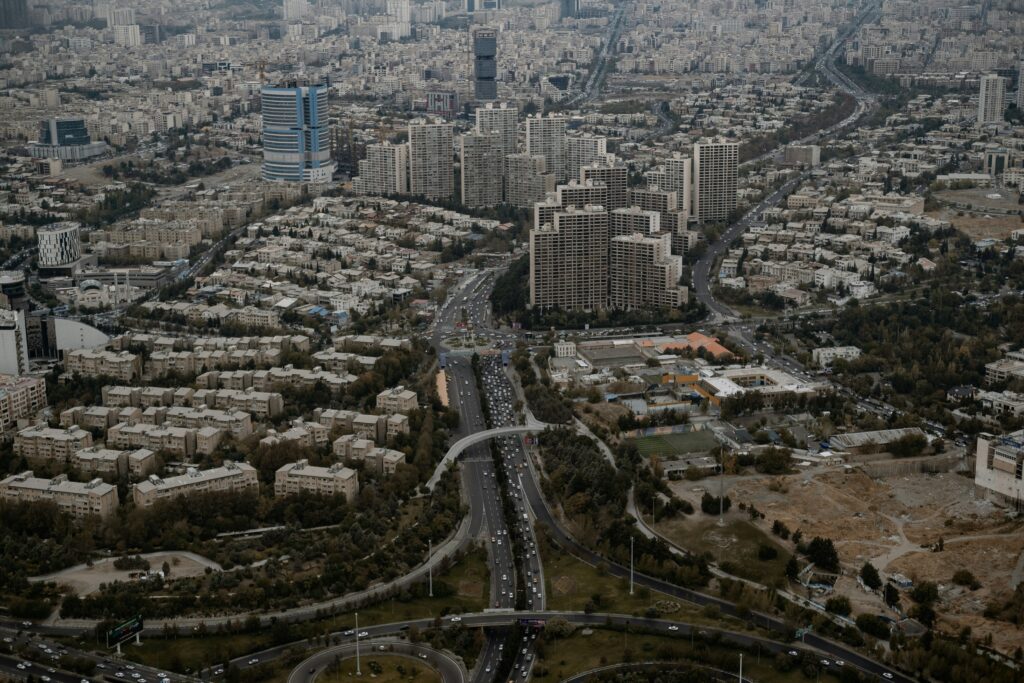
Recent property price increases have not been uniform across Tehran’s 22 districts, instead deepening the persistent divide between the affluent north and the overcrowded, infrastructurally underserved south. While the north has experienced the steepest growth, the southern districts have recorded much slower appreciation, leading to a market where apartment prices in northern Tehran are currently 3.5 times higher on average than in the city’s southern areas.
District 22, in northwest Tehran beside the Alborz Mountain foothills, recorded the largest average price increase over the past half-decade, with housing prices rising 135 percent compared with 2021, followed closely by the districts to the east that define the rest of the city’s northern border: District 5, at 130 percent; District 2, at 128 percent; and District 1, at 125 percent. Conversely, districts 17 and 18 in the city’s southwestern corner recorded the smallest increases, both at 80 percent.
This disparity underscores the broader failure of affordable housing initiatives, long a central tenet of the postrevolutionary regime. Since the early 2000s, multiple administrations have launched elaborate subsidized home-building schemes, yet these have largely failed to provide a viable alternative to the capital’s core. Instead of moving into half-built satellite towns with limited infrastructure, many lower-income Tehranis have chosen to remain in the city, buying small apartments in the south when they can and renting when they cannot. (Home—i.e., apartment—ownership has long been far more common among lower-income urban Iranians than it is in the United States, where members of the analogous group are overwhelmingly renters. As ownership has become unattainable for a growing share of lower-income Tehranis, long-term renting has become more prevalent than it was a generation ago.)
As Saeed Moradi, a real estate agent in District 17, told the Borna News Agency, “In southern Tehran, many prospective homebuyers can no longer afford to buy homes. As a result, despite rising prices, the market remains weak in terms of transaction volume, and price growth has lagged behind that of the northern districts.”
The financial chasm between these areas is further illustrated by the asking prices recorded in recent surveys. Average asking prices in District 1 and its more central neighbor District 3, home to the Tehran Art Garden and Taleghani Forest Park, currently stand at 446 million tomans per square meter, compared to just 126 million tomans in Districts 15 through 21. (For context, 126 million tomans is currently worth $696 USD at free-market exchanges, per Bonbast.com, and is slightly more than seven and a half months’ worth of the national minimum base wage.) Within District 1, the city’s highest in both wealth and physical elevation, prices vary dramatically; the top asking price in recent weeks was 840 million tomans per square meter for a one-year-old, 149-square-meter apartment in the Mahmoudiyeh neighborhood, while a nine-year-old apartment in the Evin neighborhood was listed at 310 million tomans per square meter.
Looking beyond the extremes of the north and south, older eastern neighborhoods like Districts 8 and 13 show that class history, urban design, and social appeal play major roles in determining value. In traditionally middle-class District 8, asking prices averaged 210 million tomans per square meter in June 2026 for apartments averaging five years in age. However, specific listings reveal a wide range, with 143 million tomans per square meter for a ten-year-old apartment in Vahidieh compared to 330 million tomans for a two-year-old apartment in Madaen and 299 million tomans for a newly built apartment in South Narmak. Similar divergences exist in District 13, a working-class area known for its historic military barracks and active air base, where prices range from 140 million tomans per square meter for apartments in Safa and Zahed Gilani to 280 million tomans for a three-year-old apartment in Emamat.
While the details vary from neighborhood to neighborhood, real estate transactions across the capital are nearly paralyzed. As the ripple effects of war, policy failures, and supply-side constraints amplify each other, the housing market has shifted from a dependable store of value to a source of deep uncertainty for buyers and sellers alike. Mohammad, the north Tehran homeowner, captures the present reality for most Iranians: “In this market, and with the economy in its current state, no one can make a move.”