
From Safavid coffeehouses to Instagram-era roasteries, Iranian cafés have been venues of commerce, performance, surveillance, and dissent.
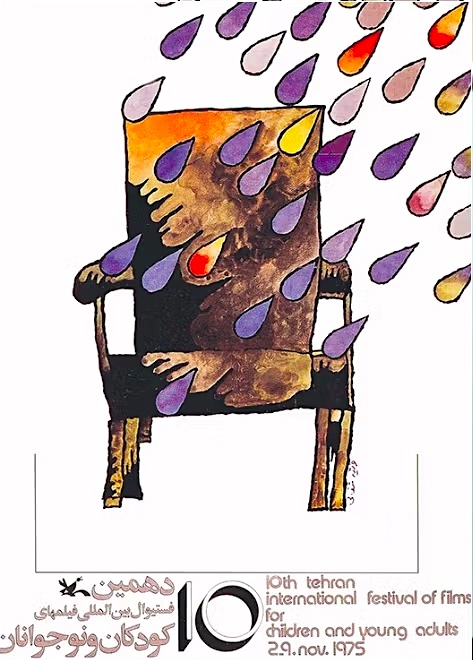
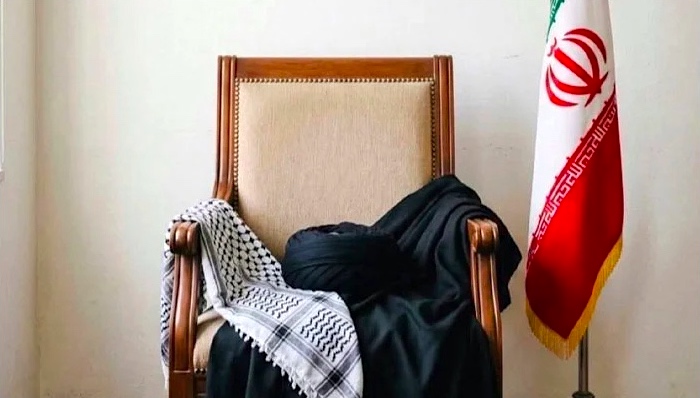
A paper takeout cup is what closed the café down. In late March, as war with the United States and Israel escalated, authorities in Iran turned off the lights at over forty Lamiz Coffee outlets across the country. Posters of Ali Khamenei were taped over the cafés’ dark windows. The chain was shuttered for featuring a coffee cup with an image that officials claimed mocked the assassination of the Supreme Leader in a February 28 air strike. The illustration, based on a 1975 poster created by graphic designer Farshid Mesghali, depicts an empty chair beneath a volley of large raindrops, which authorities said resembles the chair used by the late leader in his public appearances. Referencing the Persian New Year, which took place on March 20, the cup’s back reads “Nowruz 1405—Spring Will Come.”
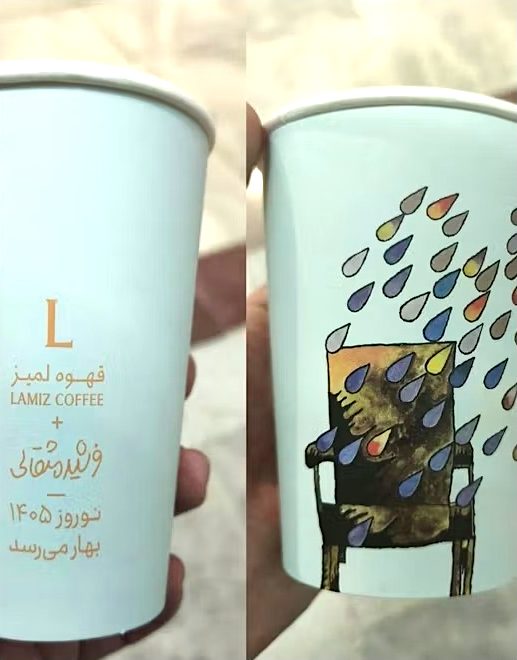
Representatives of Lamiz, established in 2004 by Iranian-Canadian Armin Lamei, have denied the allegation, explaining that the cups were ordered for Nowruz long before the war began. Subsequently, other coffee shops in Tehran such as the popular Sam Café were closed or had their Instagram pages taken down by the authorities, most of them after the April 8 ceasefire went into effect. These spaces have been crucial gathering spots for Iranians to see and hear from one another during the extended internet shutdowns that began in early January amid mass protests against the regime, and they have served as social and emotional refuges since the war began.
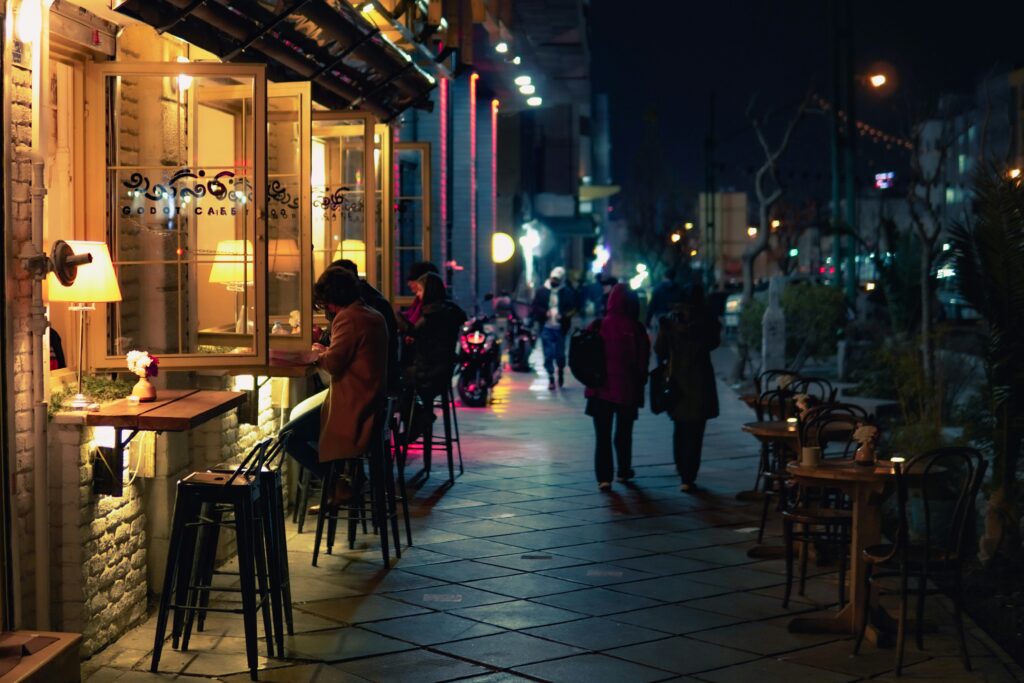
Despite the crackdowns, many cafés have remained open for business (Lamiz and Sam were allowed to reopen in early May). Every day, they come to life during long business hours between 8 a.m and 11 p.m. Young Iranians in Western-style clothing—many without any regard for Islamic dress codes—move between the city center and posh District 1. Inside, espresso machines grind and hiss, milk is frothed and shaped into foamy compositions, and playlists vary from upbeat Coldplay in the north to moody Tom Waits downtown. Lively conversation fills the air.
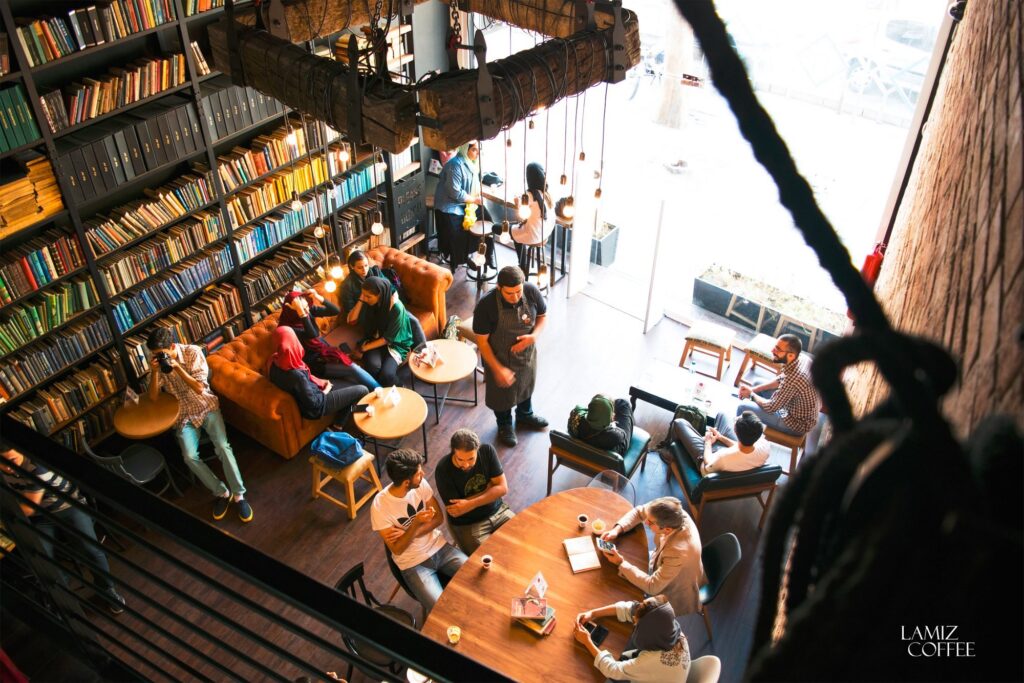
Bahram, a young visitor at one café, put it simply: “We have no internet, so we have to go to the café every day just to see our friends. The streets were empty during the war but inside these cafés the tables were full.” While the streets are busy again as the ceasefire enters its sixth week, many café windows are still prepared for bombardment, covered with colorful tape in creative patterns to prevent glass from shattering into dangerous, flying shards.
Within these popular, politically fraught destinations, what kind of public life remains possible and how much does it cost? To address that question it helps to understand cafés in Iran as establishments serving multiple purposes, part of a history of layered spaces whose functions have continually shifted over time.
1. Sleepovers at the Qahveh-Khaneh
A café in Iran is never simply a coffee shop. It can resemble a Western pub or bar without alcohol, even a muted nightclub—defined less by what it sells than by atmosphere, personal proximity, and social visibility. It is a place for being seen as much as for consuming coffee and light meals. What sustains it is the gathering itself. And the contemporary café is only the latest in a long history of Iranian social-commercial interiors, shaped by changing relations between coffee and tea, private and public life, and formal and informal assembly.
This structure has deep roots. In the Safavid era (1501–1736), during which a unified Persian state was established with Twelver Shiism as the official religion, coffee arrived as an imported commodity tied to long-distance trade networks. In the 16th century, the qahveh-khaneh (literally, “coffeehouse”) emerged in cities such as Qazvin and Isfahan. These urban establishments served both locals and travelers, with an economic model that extended well beyond coffee. Patrons paid not only for beverages but for access to a shared environment where poetry recitations, games, political discussion, and informal business took place. Information circulated through conversation rather than institutions, making the space itself a form of value. Even at this stage, the coffeehouse depended on imported supply chains and on the ability to convert social gathering into sustained economic activity, while remaining subject to the oversight drawn to spaces where people met, spoke, and exchanged ideas.
Coffeehouses were never separate from structures of power. Under Shah Abbas I (r. 1588–1629), they were drawn into the economic and political orbit of the court, at times serving as informal venues for receiving foreign envoys. This use reinforced their role as spaces where commerce, sociability, and political exchange overlapped, even as that multivalent role made them subject to scrutiny. As political discussion took place within them, efforts were made to regulate such activity; religious figures visited coffeehouses to monitor conversations and steer them toward acceptable themes. Under Shah Abbas II (r. 1642–66), coffeehouses were briefly closed before being allowed to reopen under stricter oversight, indicating that while they were economically and socially necessary, they remained closely scrutinized as part of a broader system of control.
An Economy of Storytellers and Trade
From its beginnings, the coffeehouse operated as a structured urban enterprise with multiple sources of income. Divans allowed for daytime eating and nighttime rest; to increase foot traffic, proprietors invited preachers and naqqals (storytellers) who worked within informal payment systems based on audience contributions. A naqqal might recite tales from a classic such as Ferdowsi’s epic Shahnameh, the Khamseh of Nizami, or the medieval romance Samak-e Ayyar. Evenings might be devoted to the reading of the ghazals of Hafez or fortune-telling based on his verse (fal-e Hafez). A small labor economy developed in such venues, with workers employed to prepare drinks, serve customers, and maintain supplies. Rather than relying exclusively or even primarily on coffee, the business depended on layering services—beverages, entertainment, food, and lodging.
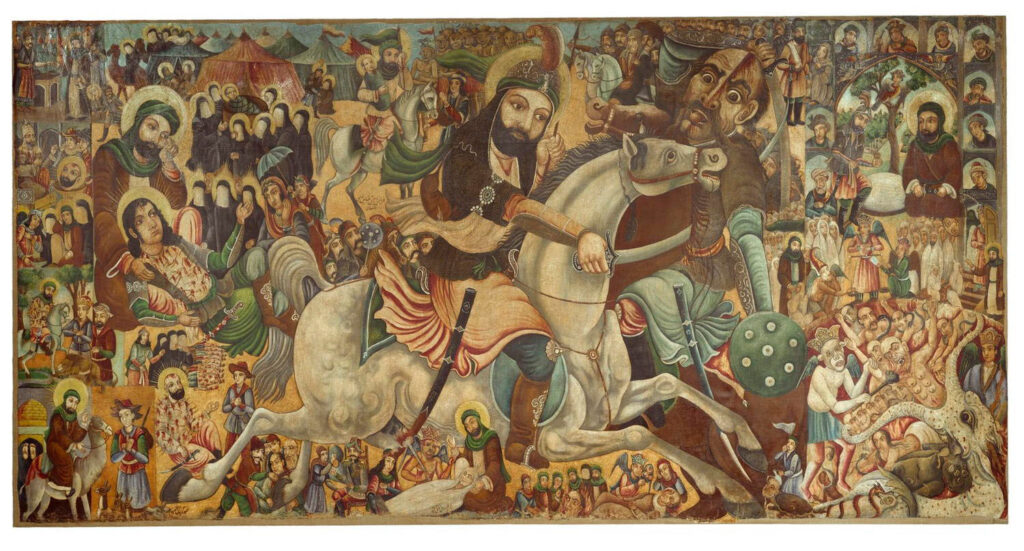
At the same time, these activities remained subject to ideological oversight. Unlike in parts of the Ottoman world and Mecca, where coffee was prohibited at times due to fears that coffeehouses fostered radical thinking and political dissent, coffee was never banned in Iran. Yet it existed within a framework where social practices could be restricted according to their impact on order. As Rudi Matthee notes, patterns of consumption were shaped by trade, geography, and hierarchy as much as by taste, and by the relationship between state and religious authority. (Matthee’s The Pursuit of Pleasure: Drugs and Stimulants in Iranian History, 1500–1900 is an invaluable historical resource.) Shia clerics often allowed certain practices to continue so long as they remained contained, reflecting a pragmatic approach to regulation that extended to spaces of gathering. Within this framework, the decline of coffee did not eliminate the coffeehouse; its functions evolved as tea replaced coffee as the dominant drink.
By the early Qajar period (1789–1925), this transition was driven by trade and cost. Tea entered northern Iran through Russian and Central Asian routes, while coffee remained tied to southern import networks via the Persian Gulf. As tea imports expanded and prices fell, it transformed from an elite commodity to a widely consumed good, gradually displacing coffee. State involvement in this shift became explicit in the late 19th century through efforts to reduce dependence on imports. At a time when roughly 83 percent of tea was imported from India, diplomat Mohammad Mirza Kashef al-Saltaneh introduced domestic cultivation after disguising himself as a French merchant to study production methods in British India. With state backing, including a production monopoly granted by Mozaffar al-Din Shah, plantations were established in regions such as Lahijan and Tonekabon, expanding to 300,000 tea plants by 1903.
The spread of tea altered the economic structure of consumption. Unlike coffee, it did not depend on specialized public venues. With the introduction of the samovar, tea moved into domestic settings, becoming part of everyday hospitality and reducing reliance on the coffeehouse as the primary site of consumption. It was cheaper, locally produced, and less exposed to fluctuations in global trade. Coffeehouses adapted rather than disappeared, replacing coffee with tea while maintaining their role as revenue-generating social spaces.
During the Qajar period, their economic function expanded further. Coffeehouses operated as informal labor exchanges, where employers recruited workers and tradesmen gathered according to occupation. They remained key points for the spread of news and information, which brought increased state attention. Reform proposals in 1879 called for closing existing coffeehouses and replacing them with regulated establishments with restrictions on such activities as newspaper reading. During the Constitutional Revolution (1905–11), coffeehouses in fact became pivotal as venues for people in a still largely illiterate society to come and listen to newspapers being read out loud.
Urban Expansion, Social Function, and Class Structure
By the early 20th century, coffeehouses had become embedded in the urban economy at scale. In Tehran, their numbers rose from 711 in 1929 to around 1,500 by 1960 and roughly 3,500 by 1979, before falling sharply to just over 900 by 1990. The pattern was similar in Isfahan, where numbers increased from about 19 in the late 19th century to around 70 by the 1920s. This expansion reflected the range of economic functions these establishments performed at a time when few other urban institutions attracted a comparable range of activity.
During the Pahlavi period, rapid urbanization brought an influx of working-class men, migrants, and tradesmen into cities. Coffeehouses operated as low-cost, accessible businesses within neighborhood economies and bazaar networks. Their income was built on multiple streams: tea, shisha, and simple meals such as omelettes and meat stews, combined with the monetization of space. They continued to function as informal labor exchanges and sites for the circulation of information about everything from national politics to local affairs, sustaining a steady flow of customers interested in more than just food and beverages.
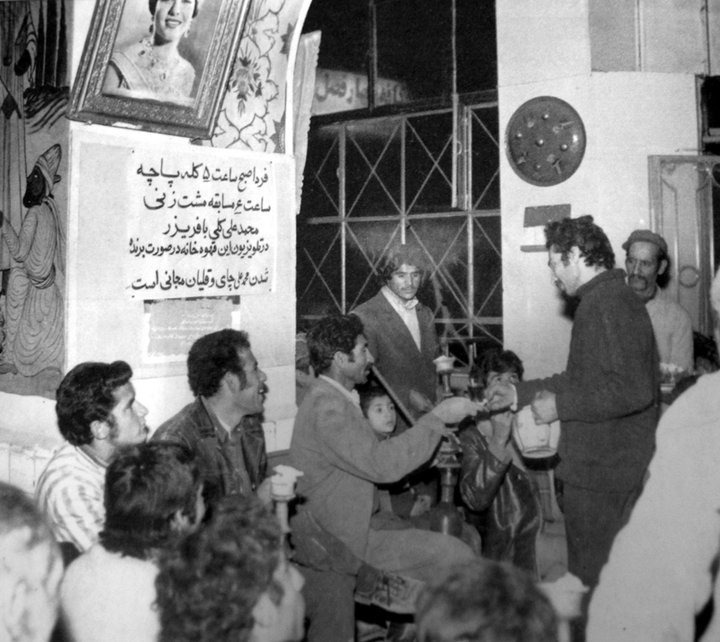
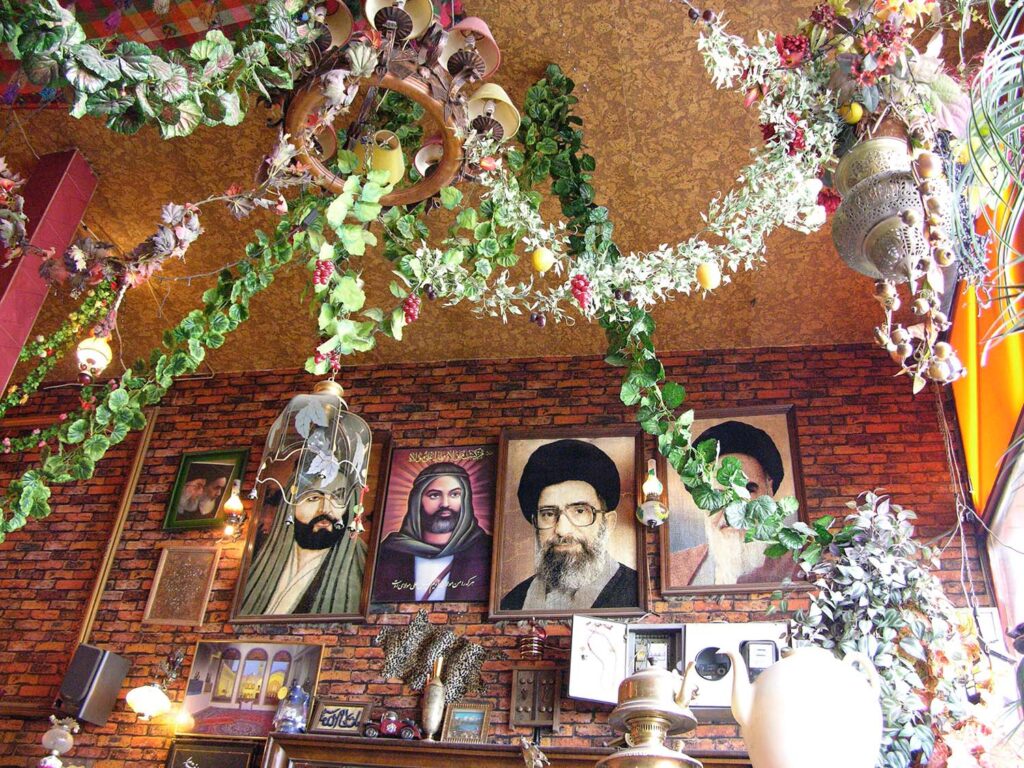
The business model reflected the economic position of their clientele. These were high-turnover, low-margin establishments, concentrated in older districts and serving primarily lower- and middle-income patrons. Interiors were modest and durable. Almost universally on display were portraits of the first Shia Imam, Ali, and the ill-fated wrestler Gholamreza Takhti, whose death by suicide became the subject of lasting conspiracy theories. Together, these figures represented ideals of honorable masculinity and chivalry among working-class patrons. The viability of coffeehouses depended on regular customers, inexpensive offerings, and continuous occupation of space. Today, the remaining coffeehouses—largely located in older, religious, or economically disadvantaged neighborhoods—continue to operate as small, service-based businesses built on sustained patronage.
Coffeehouse to Café
The emergence of modern cafés in early 20th-century Tehran marked a shift in both urban consumption and the organization of social space. Establishments such as Café Naderi, Cafe Orient, and Café Loghanteh—now reopened at the Qasr Prison Museum—introduced a different commercial model tied to urban modernity. Among them, Café Naderi, founded in 1927 by Armenian immigrant Khachik Madikians, became the most prominent. It operated not only as a coffeehouse but as a restaurant and meeting place, drawing a more affluent and educated clientele, including writers and intellectuals such as Sadegh Hedayat, Forough Farrokhzad, and Ahmad Shamlou, and generating income through extended patronage rather than quick turnover.
Compared to the classic qahveh-khaneh, where revenue depended in large part on patrons attracted by storytelling, other forms of entertainment, and lodging, the modern café reorganized its economic base around print culture and longer sitting times. Newspapers and journals replaced oral narration as the primary draw, encouraging customers to remain for extended periods, order repeatedly, and return regularly.
As Rudi Matthee’s work shows, changes in these spaces were shaped by trade, urban development, and consumption habits. Just as Safavid coffeehouses had depended on imported coffee and supplementary services, and Qajar-era venues had adapted to tea and labor exchange, modern cafés aligned themselves with new economic conditions. Whereas traditional coffeehouses were entirely male preserves, the expansion of female social possibilities after Reza Shah Pahlavi’s 1936 decree prohibiting women from wearing the veil in public widened cafés’ customer base. They became the first commercial “third places” accessible to women, and mixed-gender patronage made them natural venues for dating.
At the same time, cafés remained subject to regulation and oversight as public gathering spaces. Their role in hosting discussion, intellectual exchange, and social interaction placed them within the same framework of monitoring and control that had shaped earlier coffeehouses.
2. Rise of the Baristas
Tehran’s postrevolutionary and postwar cafés represent a later stage in a longer economic history of Iranian social interiors, extending from the Safavid coffeehouse to the modern café. Across these periods, the structure persisted even as the form changed: spaces of gathering moved between coffee and tea, public and domestic settings, and regulated and informal environments, while continuing to operate as businesses shaped by shifting political and economic conditions.
Over the years, Café Naderi’s identity gradually shifted from dynamic gathering place to something more symbolic, valued for its cultural association with earlier generations. Efforts to prevent its demolition secured its designation as a protected heritage site, preserving it not simply as a business but as part of Tehran’s urban and economic history.
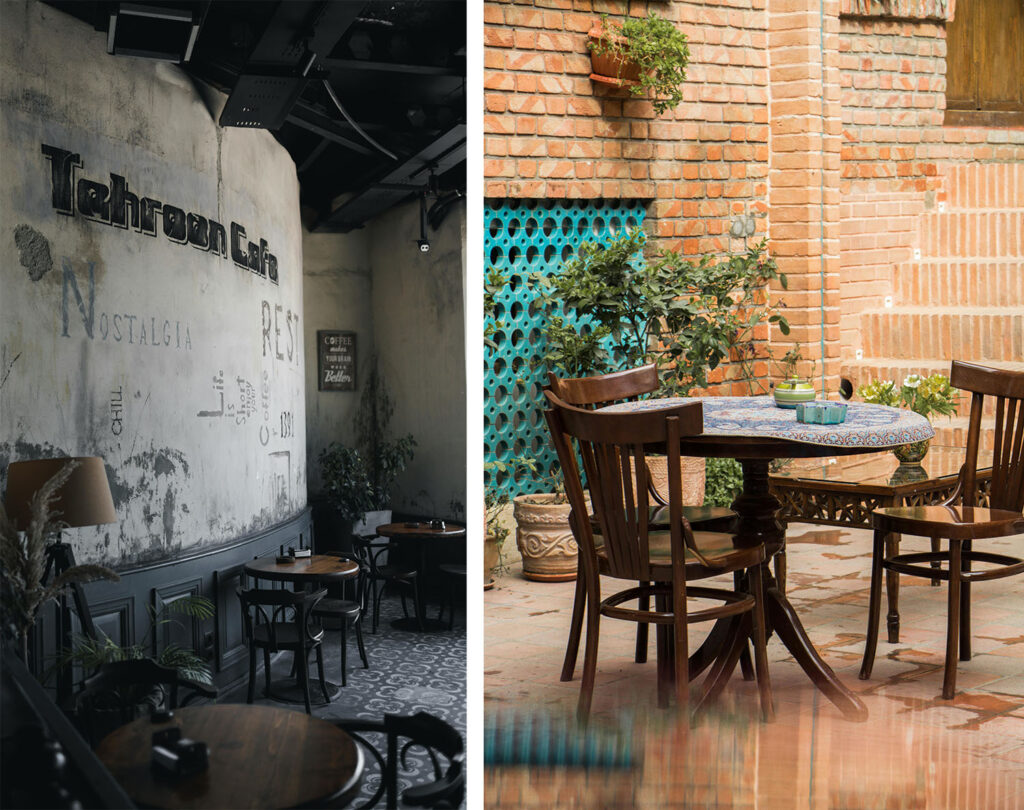
Meanwhile, new establishments opened that aimed to replicate the ambience of the era in which Naderi first opened its doors. These “nostalgia cafés” staged the atmosphere of the first half of the 20th century through retro furniture, archival photographs, and historical objects. What was being sold was not only food and drink but a constructed sense of the past—memory turned into an economic asset. With warm lighting, restrained noise volume, and durable furnishings, their interiors were carefully managed to encourage customers to remain for extended periods and to return time and again.
Cafe Shouka, opened by Yareli Pourmoghadam in September 1981 in Gandhi Mall, illustrates this model. Its location within what became a concentration of cafés tied its business to foot traffic and neighborhood demand. It combined service with production by roasting its own coffee beans daily, reducing dependence on external suppliers while adding value through control over quality. Its unchanged décor—tables, wooden benches, and an old television—functioned as a stable visual identity, reinforcing customer loyalty. The café’s viability depended on regular patrons who treated the space as part of their routine, sustaining income through continued use rather than one-time transactions. Other cafés, such as Aram on Qaem Maqam Street and Santo in the Tehran Bazaar, operated within similar, locally embedded economies.
From the 1990s onward, cafés increasingly diversified their revenue streams. Cafe Aks, located beneath the Eskan Residential Towers on Mirdamad Boulevard, represents a shift toward hybrid models. It combined coffee service with exhibition space, integrating photography shows directly into its daily operation. Exhibitions attracted visitors, while café sales provided a steady financial base. Additional income came from the sale of CDs and art magazines. Its position within a commercial complex linked its business to a wider retail environment, where cultural programming and hospitality reinforced each other economically.
The Commercialization of Coffee Culture
By the early 2000s, cafés in Tehran increasingly adopted Western-style formats while coming under closer and more systematic state scrutiny. Although many remained small neighborhood businesses, they were incorporated into expanding systems of surveillance through licensing requirements, municipal directives, and security and moral enforcement policies. By the mid-2010s, CCTV installation had effectively become a de facto condition of operation across much of the urban commercial sector. Enforcement intensified during moments of political unrest, including after the 2009 protests and again following the Mahsa Amini protests, when surveillance footage from businesses was used for identification and enforcement. Today, all businesses are required to maintain surveillance systems as part of licensing, with noncompliance risking fines, closure, or loss of permits. Some cafés resisted and were shut down, but most complied, acquiescing to conditions of oversight like those that have long shaped Iranian coffeehouses and cafés.
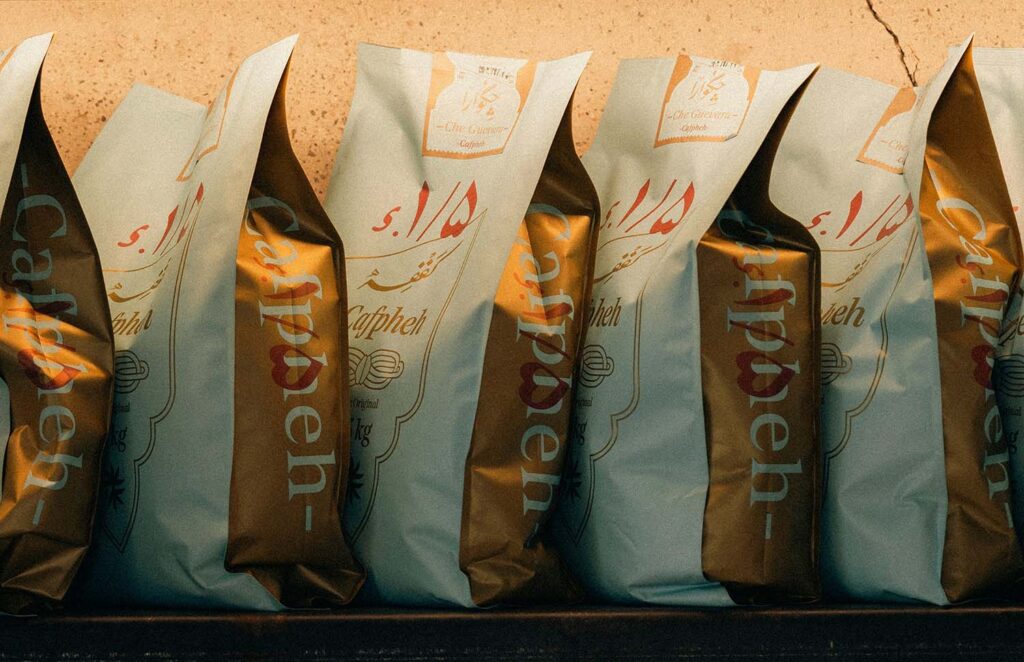
Despite these constraints, café-going continued to expand. Young Iranians remained frequent customers, sustaining a dense network of small cafés alongside larger branded chains. Many establishments adopted international models in menu design and visual presentation, while adapting to local economic conditions. One early example of expansion through branding and retail was Raees Coffee, founded in 2000, which developed into a multibranch business while also selling packaged coffee. A similar trajectory was followed by Bonmano, which built nationwide distribution of packaged items aimed at broader markets. Positioned as a more affordable brand, Bonmano entered supermarkets with products such as self-brew disposable sachets before opening its first café in Iran Mall, the world’s largest shopping mall, in 2022.
Alongside these retail-driven models, a roastery-café format emerged in which production, branding, and service were integrated within a single business structure. Lamiz became the most prominent example, expanding to dozens of locations across multiple cities. Selling its own packaged beans, it positioned itself in the mid-market segment, combining affordability with standardization to reach a wide urban customer base. A different model developed with Sam Café in Sam Center on Fereshteh Street in northern Tehran. Originally designed to generate foot traffic for a luxury retail complex, the café itself became the primary attraction. Alongside conscientious sourcing and specialty roasting, it incorporated art displays, exhibitions, and a highly developed visual identity. Its success led to it opening branches across the city.
The original café in Sam Center became known for drawing customers from across different segments of Tehran’s urban population. Business meetings, student gatherings, informal artistic encounters, celebrity visits, and affluent arrivals in luxury cars all take place within the same space. Amid shops selling high-end goods such as opulent Swiss watches and wildly expensive designer T-shirts, the flagship outlet has often been the most active commercial and social space in the complex, generating revenue through prolonged stays and the desire for social visibility in a curated, on-trend environment.
The broader rise of roastery cafés marked a structural shift in Tehran’s café economy. These businesses functioned simultaneously as coffee shops, retail outlets, and production sites. Coffee beans were roasted in-house or through tightly controlled supply chains, while packaged products extended the brand into domestic and workplace settings. Freshness and traceable sourcing became central to marketing, turning coffee into a branded lifestyle product tied to design, consumption patterns, and social display.
The geography of café development, meanwhile, reflected Tehran’s wider economic inequalities across a pronounced north–south divide. Northern districts such as affluent Fereshteh were characterized by larger, more expensive, more design-forward cafés, where revenue was closely linked to atmosphere, branding, and extended stays. In contrast, cafés in central and southern areas remained smaller, denser, and more functional, closer to older patterns of everyday social use rooted in neighborhood economies.
A Parallel Coffee Economy
The growth of specialty coffee in Tehran has reshaped both café culture and the organization of labor. The barista, once peripheral to the café economy, has become a central figure occupying a hybrid technical and performative role. Espresso extraction, milk texturing, customer interaction, and visual presentation are integrated into a single form of work in which coffee preparation is inseparable from the production of atmosphere and experience. This transformation has been accompanied by the emergence of formal professional structures. Institutions such as the Iranian Barista Guild, along with competitions modeled on the World Barista Championship, have contributed to the formation of a recognizable coffee labor market. Figures such as Morteza Bagherpanah, who overcame dozens of competitors to win the crown of 2018 Iran Barista Champion, and initiatives led by Mahsa Niyayesh, founder and CEO of the Iranian Women Coffee Association, became associated with this development, while the work itself remained economically unstable due to rising input costs and fluctuations in consumer spending.
International sanctions and financial restrictions have also significantly shaped the structure of Iran’s specialty coffee sector. Limits on banking, travel, and certification access have constrained participation in global training systems, competitions, and professional networks. As a result, domestic institutions developed in partial substitution for international frameworks, producing a parallel coffee economy that is simultaneously isolated and internally structured.
Over the past decade, this parallel system has expanded through the rapid growth of coffee academies and training programs. Institutions such as the Iran Coffee Academy and Iran Coffee School introduced structured curricula covering brewing methods, sensory evaluation, café management, and service standards, contributing to the formalization of café labor. While access to official Specialty Coffee Association certification remained limited, selective international integration continued. In 2023, the introduction of the Italian Barista Certificate through Espresso Academy marked a partial reopening of training channels. Competitions, workshops, festivals, online courses, and informal networks further accelerated the circulation of technical knowledge. By 2025, the expansion of training infrastructures and a younger workforce increasingly fluent in specialty coffee terminology was clearly transforming the scene, with barista training becoming more central to the functioning of the café economy.
Media and publishing have also played a key role in structuring these developments. Safa Haratian, founder and editor of iCoff.ee—the leading Persian-language media outlet in the field—has contributed to the professionalization of coffee discourse through reporting, industry analysis, and coverage of cafés, roasting practices, competitions, and global trends. Through iCoff.ee and his international writing, Haratian has helped connect Iran’s expanding coffee sector to broader developments in the global specialty coffee industry while reinforcing domestic training and consumer knowledge systems.
3. The Red Lipstick Effect
By the 2020s, cafés in Tehran increasingly developed into hybrid interiors combining coffee service with bookstores, retail, galleries, performance spaces, and work environments. New venues such as Luvo and Roostar (already with four locations)—opened during the recent Ramadan War with the United States and Israel—and café spaces linked to Saless Publishing House on Karimkhan Street reflect this shift. In these settings, the café functions simultaneously as leisure space, workplace, commercial site, and cultural venue.
This hybridization also extends into event- and exhibition-based business models. Daa House operates as a café-performance venue where live theater, jazz, and experimental music events are staged within a hospitality setting rather than a formal cultural institution. Performances frequently sell out, indicating sustained demand for small-scale cultural programming within Tehran’s independent arts economy. In this model, attendance becomes a purchasable commodity, and the café operates as a hybrid cultural enterprise combining hospitality, performance, and urban sociability within a single commercial structure. Ticket prices generally range from around 200,000 to 350,000 tomans (2 to 3.5 million rials), depending on the program. (A year ago, that amount would have fetched about $2.40 to $4.20 USD from a Tehran currency trader; today, $1.10 to $1.95. From March 2024 to March 2026, the official minimum monthly wage was 110 million rials, though many jobs fell short of that in practice. In response to runaway inflation, the government recently raised the minimum wage to 166 million rials per month—$92 USD as of May 15, per Bonbast.com.)
A parallel development is visible in hybrid gallery-cafés, where exhibition space is sustained through café revenue and event programming rather than institutional funding or direct art sales. Spaces such as Iranshahr House, Ariana Art Cafe, and Kajeh Art Cafe combine café service with rotating exhibitions, talks, and informal cultural gatherings. Café operations function as the primary financial base, subsidizing exhibitions, which in turn generate footfall and repeat consumption, linking cultural visibility directly to commercial sustainability. Iranshahr House, founded by Majid Mollanorouzi, former director of the Tehran Museum of Contemporary Art, exemplifies this model. It integrates a bookstore, café, private art consulting and sales office, and gallery space, translating institutional cultural experience into a flexible, market-oriented business structure.
Across business models both conventional and cutting-edge, Tehran café prices are relatively high, restricting regular use largely to middle and upper-middle income groups. One patron, Amir, noted: “I go to cafés almost every day, either to socialize or to spend time alone … I spend between five million and ten million tomans on each visit.” When the average pre-tax monthly salary in Iran sits at around 40 million tomans (per wage.is), even if the figure in the capital is perhaps double that, daily indulgence like Amir’s is available to few.
At the broader level, a single café meal can cost from 3 to 5 percent of the average monthly wage and up to ten times more than a home-cooked meal, making frequent patronage next to impossible for most working-class Iranians. Access is also shaped by nonmonetary factors, including familiarity with the behavioral and aesthetic codes of café culture—language, dress, and modes of interaction. As a result, cafés function as sites where class distinctions are both reflected and reproduced.
Visible Consumption
Despite the rapid expansion of cafés and specialty coffee culture in recent decades, tea remains structurally dominant in Iranian homes, workplaces, and everyday hospitality. For many Iranians—particularly older and lower-income groups—tea continues to signify affordability, continuity, and domestic routine, while coffee is more closely associated with younger urban populations, public consumption, mobility, and discretionary spending. Rather than displacing tea, coffee has largely been added alongside it, creating an additional recurring expense within everyday household and leisure budgets.
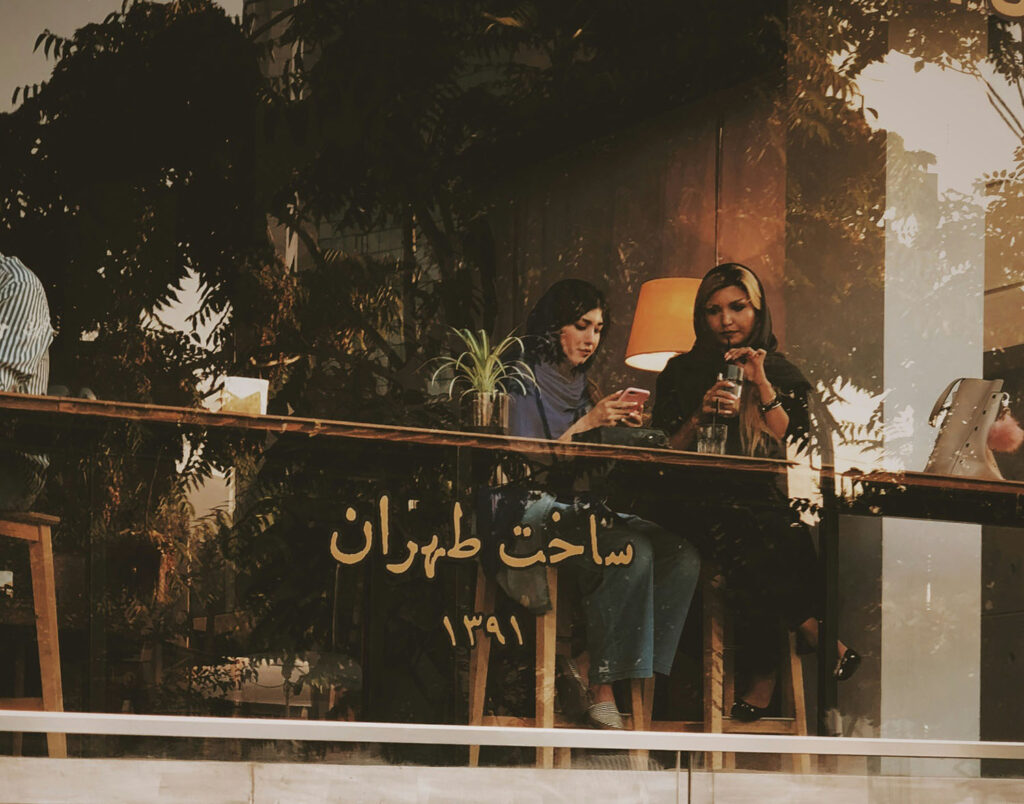
Under conditions of economic pressure, this pattern has become visible through what has been described as the “red lipstick effect,” in which major expenditures are reduced while smaller, visible forms of consumption are maintained to preserve status and normality. Even during periods of financial strain, including the recent war, many young consumers in Tehran continued visiting higher-end cafés, where the cost of entry remained relatively modest compared to housing, transport, and other major expenses. Cost management often takes the form of shared consumption—a coffee accompanied by a shared pastry or dish—allowing group participation while reducing per-person spending. At the same time, cafés function as sites where class status is performed through the display of branded clothing, luxury accessories, and the latest smartphones.
These dynamics are also reflected in everyday interactions. At a Fereshteh Street establishment, one patron, Maryam, responded to a question about whether going out to cafés on a regular basis is getting too expensive: “Maybe for some people. But for us it is still manageable.” Her friend added, “We share the food anyway because we have to watch our figures.” Such exchanges sit alongside visible markers of consumption, where fashion, accessory, and cosmetic choices signal belonging to specific urban social groups.
Economic pressures have begun to reshape patterns of coffee consumption more broadly. Rising café prices have encouraged some consumers to shift from café-based consumption toward the purchase of coffee beans for home brewing. This shift reflects structural vulnerability in the sector: coffee in Iran remains entirely import dependent, making retail prices highly sensitive to inflation, currency volatility, and broader, macroeconomic instability.
Declining Imports vs. Growing Demand
There are no official published figures specifically for Iran’s coffee imports in 2026, but available trade data indicates mounting pressure on the market.
During the first eight months of the Persian calendar year 1404 (March 21–November 21, 2025), Iran imported approximately 26,493 tons of coffee valued at about $156.6 million USD. This represents a 29.4 percent decline in import volume compared with the same period in 1403, while the average unit value rose from roughly $4.65 USD per kilogram in 1403 to $5.91 USD per kilogram in 1404, reflecting rising global coffee prices.
This data, compiled by Mehran Mehdizadeh, commercial consultant to the Northern Tea Factories Syndicate, points to a broader pattern: declining volumes alongside increasing prices. Import flows remain highly concentrated, with around 70.7 percent of coffee entering through the United Arab Emirates before the war, while India, Indonesia, and Vietnam supply most of the remainder. Together, these four countries account for approximately 96.2 percent of total imports. The contraction has been attributed to the higher international prices (exacerbated by Iranian currency depreciation), stock accumulation from earlier overimporting, and constraints in foreign exchange availability.
These economic pressures intersect with broader political and regulatory uncertainty. As coffee consumption became embedded in urban lifestyles, open warfare and a fragile ceasefire have introduced additional constraints around the import of nonessential goods. Foreign currency allocation prioritized essential imports, increasing expectations of further price rises and reinforcing the volatility of supply.
At retail level, these pressures are visible in consumption shifts. A coffee seller in central Tehran reported sustained demand despite worsening household conditions, alongside a gradual move from café consumption toward home and workplace preparation. Periods of conflict have produced sharp short-term declines in sales, followed by concerns that sustained price increases could suppress demand.
Price differences across cafés can reflect everything from differences in quality and wholesale cost to rent, location, branding, and design overheads. As of April 25, the local delivery app Snappfood indicated that Lamiz Coffee (still closed at the time) was charging approximately 35 million rials per kilogram for Arabica beans, with a cup of espresso around 1.5 million rials. At Sam Café, beans were priced similarly, while espresso was close to 3 million rials. At Roostar Cafe, espresso was priced at around 2.6 million rials. (By the time this article is published, all of these prices will almost certainly have risen due to the ongoing crash of Iran’s currency.)
The broader trajectory indicates continued growth in demand, even as supply remains exposed to exchange-rate volatility, spikes in shipping costs, and state-managed foreign currency allocation. Supply chains are extended and often routed through intermediary countries, with prices shaped by external shocks rather than domestic production capacity.
Cafés, meanwhile, remain subject to periodic inspection, licensing reviews, and closures, reflecting the persistent, intensive regulation of public gathering spaces in the Islamic Republic.
Café Culture, “Clean” and Real
Across centuries, Iranian café culture has shifted in form—qahveh-khaneh, tea house, literary café, nostalgia café, roastery café, gallery café, and performance café—each shaped by changing political pressures, cultural formations, and economic conditions. Two continuities run through these transformations.
The first is financial improvisation. From Safavid coffeehouses sustained by storytellers, other performers, and lodging, to Qajar-era labor-exchange venues, to contemporary cafés dependent on retail bean sales, exhibitions, ticketed events, and branded merchandise, these spaces have rarely been viable on beverage sales alone. Supplementary economies have remained central throughout.
The second is suspicion. From their earliest appearance, cafés and coffeehouses have been treated as sites where strangers gather, information circulates, and dissent can form—and thus been monitored, inspected, regulated, surveilled, and even closed by nearly every government. Across regimes, cafés have remained subject to scrutiny not for what they serve, but for the forms of community they enable.
Within these conditions, cafés continue to operate as both economic and social infrastructure. In Tehran and other large cities, rising prices have not halted patronage; young Iranians continue to frequent cafés, sustaining both consumption and the practices of meeting, pausing, and lingering. The café functions simultaneously as commercial experiment, temporary refuge, and staged social space—its viability resting on continued assembly under constraint. This persistence is evident in the cycle of closure and return, including the reopening of Lamiz Coffee and the immediate resumption of its online presence in an Instagram post.
In mid-May, several weeks into the ceasefire, a Tehran resident was asked by a friend abroad what he had been up to recently. “Not much—cafés” was the response. He continued, “There is no point in investing anything or starting a business. We don’t know if we’ll be alive tomorrow. So at least we can come to a café and enjoy ourselves.”
Yet cafés also remain sites of political contention. Following the Lamiz chain’s reopening, a makeshift café was established outside its Farmanieh branch by diehard government supporters. Under the banner “We are Tamiz [clean] Coffee and extremely in love with our homeland,” a chador-clad woman explained: “We began gathering outside this café to show our disdain for what these people had done. But when our numbers increased, the management of Lamiz asked us to leave because they said we were interfering with their business. So we thought—why not serve ourselves coffee where we have gathered? We are not coffee sellers, but we are doing this to object to them.” Another woman holding a Mojtaba Khamenei poster said she rejected Lamiz’s “dirty coffee” while affirming “clean coffee” as honoring the memory of the war’s martyrs.
Across such episodes, cafés continue to function as contested commercial spaces in which consumption, labor, and political expression intersect. The opposing interpretations attached to a not-so-simple cup of coffee ultimately return to the same structural condition—a social life organized through café spaces that persist, adapt, and sometimes vanish in the face of economic or governmental pressure only to reappear.