
The southern coast provides oil, gas, ports, and strategic depth, while remaining poor. Tehran pledged to transform it with a new maritime economy.
Nearly half a century ago, just a year after the Revolution, a young Iranian engineer arrived in the port city of Chabahar to work on what was supposed to be one of the country’s great strategic projects. Chabahar sits near Iran’s southeastern edge, on the Gulf of Oman, with unimpeded access to the Indian Ocean. On a map, its advantages seem tantalizingly obvious. It lies outside the Strait of Hormuz, close to major shipping routes and within reach of markets stretching from the Persian Gulf to Central Asia and the Indian subcontinent. There are few places in Iran where geography appears to offer such evident economic possibilities.
Yet the engineer remembers the project, which had begun under the Shah and which the new Islamic Republic was eager to pursue, as something very different. The port was being developed almost exclusively for military purposes. There was no doubt, he told Resanegar, Tehran Bureau’s economic unit, as to the area’s commercial promise. But neither Chabahar nor the coastline around it was seen as the potential foundation of a broader economy in the poverty-stricken province of Sistan and Baluchistan.
For decades, this blind spot has defined much of the government’s relationship with the south. Iran’s southern provinces contain many of the assets on which the country depends. Khuzestan, in the country’s southwestern corner, holds roughly 80 percent of Iran’s onshore oil reserves. Bushehr and its coastline became the heart of the country’s enormous natural-gas and petrochemical industry. Hormozgan has Bandar Abbas, Iran’s principal container port, as well as the shoreline and islands overlooking the Strait of Hormuz. Farther east, Sistan and Baluchistan’s coastline—known by the region’s ancient name, Makran—provides entrée to the open sea through Chabahar.
And yet the wealth generated in the region has never translated into comparable prosperity for the people who live there. Khuzestan, Hormozgan, and Sistan and Baluchistan continue to rank poorly by measures of economic well-being. In the spring of 2025, according to figures from Iran’s National Statistics Center, Khuzestan had the country’s highest level of economic hardship. Hormozgan and Sistan and Baluchistan also performed worse than the national average. Bushehr, fronting most of the northwestern side of the Persian Gulf, was the exception, though only modestly so.
This is one of the central contradictions of the modern Iranian economy. The south functions as the country’s energy base, as well as its strategic gateway, but the wealth it generates is hardly reflected in development within the region itself.
Before the 1979 Revolution, oil revenues extracted largely from the south financed development elsewhere in the country, while major investment inside the region concentrated on refineries, export facilities, and projects such as the Kharg Island oil terminal.
After the Iran-Iraq War, successive governments built petrochemical complexes and expanded the oil and gas chain. South Pars and Asalouyeh became industrial behemoths. Free-trade zones were established. Ports grew, and military investment expanded along with them. Khatam al-Anbiya Construction Headquarters—an arm of the Islamic Revolutionary Guard Corps (IRGC)—and the Defense Ministry’s Marine Industries Organization built shipyards and other installations along the coast. In sum, the Islamic Republic was developing the south, but much of what it was developing served almost exclusively the needs of the state: energy exports, logistics, and defense.
Even the heavy industry that was established in the region has been at best of limited benefit to it. According to Iranian media reports, 70 percent of the workers in the south’s vital oil and petrochemical industries are nonlocal. Because these industries are largely state-owned, their managers are political appointees and generally not from the surrounding area. Commonly referred to as “commuting managers,” they reside in Tehran, Isfahan, or other major cities. They typically fly to the work site a couple times a week, for visits lasting a few hours. In hiring, these managers tend to favor applicants from their home regions—especially as there is a dearth of vocational and technical training centers in the south where locals might gain needed skills. Many of the remaining industrial facilities are operated by contracting companies, most of which are based in Tehran and do their recruiting there. Consequently, up to 90 percent of the workforce in privately owned plants is nonlocal.
The result has been a peculiar kind of growth. Enormous industrial complexes rose beside communities struggling with persistent unemployment and inadequate services while facing new industry-related water shortages and pollution. The region is indispensable to the national economy while its people long remained virtually invisible to national policymakers.
The maritime plan
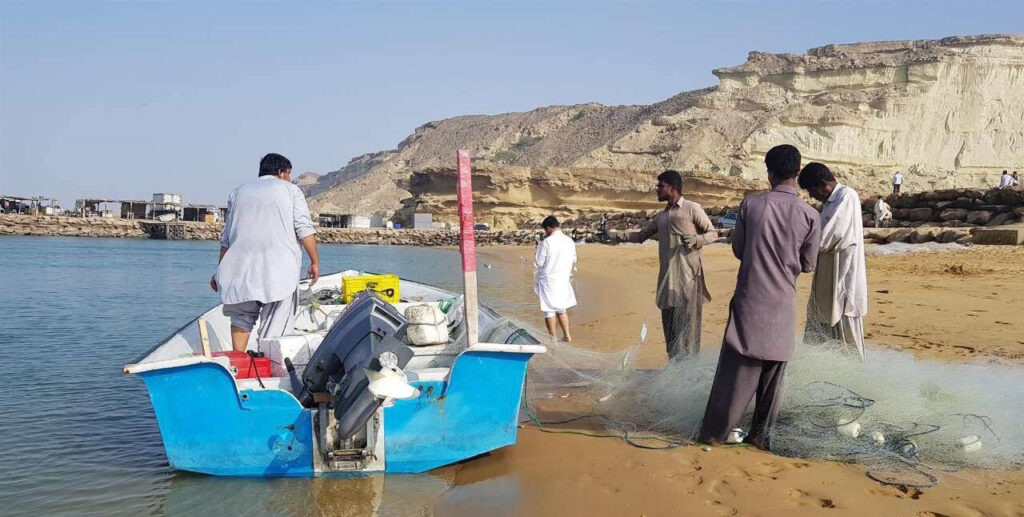
For years, governments paid little more than lip service to the problems in the region. Then came an ambitious idea: Iran would turn toward the sea.
In November 2023, Supreme Leader Ali Khamenei issued a nine-point directive under the title of General Policies on Maritime-Oriented Development. By the time of the Seventh Development Plan, approved by the Majles in June 2024 and put into action by President Masoud Pezeshkian a month later, the concept of a “marine-oriented economy” had become something approaching a national strategy.
The Makran coastline on the Gulf of Oman, adjoining Pakistan, would be developed. Chabahar and Bandar Abbas would expand. Petrochemical plants, steel mills, and other water-intensive industries would move from Iran’s increasingly arid interior toward the coast. The country would finally build out and take full advantage of the North-South Transport Corridor, described by state media as a “sanction-proof route with great economic prospects,” connecting the Persian Gulf and Indian Ocean to markets farther north. Iran would become a regional transit hub. In January 2025, government spokesperson Fatemeh Mohajerani stated that the Makran region was being seriously considered as a potential site for relocating the country’s capital.
The ambition was extraordinary: not merely to build more ports but to alter the geography of the Iranian economy.
For a country increasingly constrained by drought, the idea had a compelling logic. Much of Iran’s industrial development took place on the central plateau, where water has become dangerously scarce. With advances in desalination, the south could address that problem, while offering ports for international commercial shipping and territory that had never been developed on the scale its location seemed to justify.
The engineer who worked in Chabahar half a century ago calls the region Iran’s “gold mine.” In the 1970s, he said, the extreme heat and lack of modern cooling made large-scale settlement and investment more than difficult. That calculation has changed with greater access to air-conditioning across the country and worsening water scarcity in central Iran.
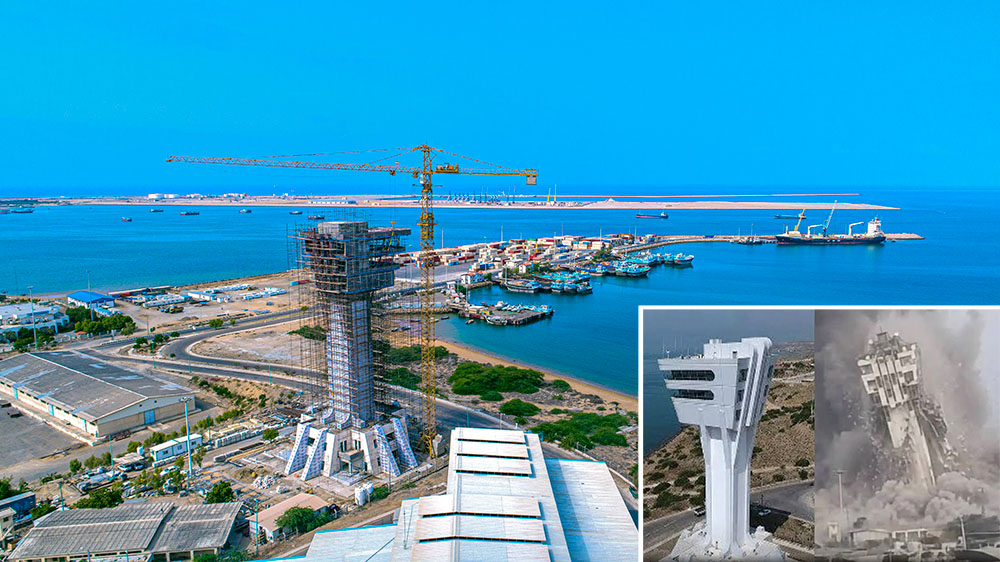
The question was no longer whether the south had potential. It was whether the Iranian state was capable of turning that potential into sustained civilian development. This question was still unanswered in February 2026 when war arrived. The geography Iran had promised to make the foundation of its economic future became central to the conflict. Ports, coastal defenses, military installations, and logistical networks assumed immediate strategic importance and were targeted in US strikes. The reporting done for this article establishes that civilian facilities, including desalination plants, grain storage, agricultural water systems, and transportation infrastructure, have also been damaged.
As a result, the issue confronting southern Iran now is not simply whether the war will derail an ambitious development program. It is whether the government will respond to the destruction by reproducing the same pattern that has shaped the region for decades: rebuilding the south primarily in accordance with the security needs of the state. That possibility is especially significant because Iran entered the war without the funds needed to carry out many of its development promises.
A Tehran-based journalist and economic analyst told Resanegar that even before the conflict, the government was struggling to finance major projects. The war has only increased the demands on its limited resources. Damaged roads, ports, water systems, and industrial facilities must be repaired. Military installations and other defense capabilities must be reconstructed.
What remains for everything else? The government has given one indication of how it may respond to that question. On July 11, Ali Abdolalizadeh, the president’s special representative for Makran development, told Iran’s Chamber of Commerce that the state intended to retreat from the direct management of the development program, restricting itself largely to policymaking while transferring implementation to the private sector and other nongovernmental actors.
On paper, such a shift might appear to signal economic liberalization. Under wartime conditions, it could mean something simpler: the government does not have enough money.
And transferring responsibility to private investors raises a second problem. The Makran strategy depends not merely on building roads and ports but on persuading people and capital to move toward the coast. Investors need to believe factories will operate. Workers need schools, hospitals, and housing. Families need to imagine a future, while war undermines precisely that sort of vision.
“If the war turns into a prolonged conflict and living and investing in the south is perceived as risky,” the Tehran analyst said, development projects could stall while financial and human capital begins moving in the other direction. That exodus has not happened on a large scale, at least not yet.
In Bandar Abbas, a woman named Leila said friends and relatives repeatedly ask why she has not left.
“This is our home,” she tells them. “Where are we supposed to go?”
The roads remain open, she said, and she had seen no significant wave of departures. In Qeshm, another resident described much the same thing. Explosions could be heard around the island, she said, but daily life continued largely unaltered. There was little evidence even of widespread panic buying.
Their decision to remain might sound surprising from a distance. Up close, it is partly practical. Leaving requires gasoline and money. It requires somewhere to stay. And in a war in which danger is not confined to one front, departure offers no guarantee of safety.
But whether people are leaving today may be merely a footnote to a larger, still unfolding story. People in southern Iran were already being pushed from their communities long before the latest fighting. They were leaving because of heat, drought, unemployment, water shortages, and deteriorating public services. Iran’s Migration Observatory reported tens of thousands of displacements in the south associated with floods, dust storms, and tropical storms in 2021 and 2022, while Khuzestan has ranked among the country’s leading provinces for outmigration.
War adds another layer to pressures that have accumulated over decades. That history is particularly vivid in Khuzestan, where memories of the Iran-Iraq War remain embedded in family life.
Losing a sense of belonging
Samireh was nine when her family fled the Karun Agro-Industry residential complex in 1987. The bombing near the Iraqi border had been getting closer. Then a bomb landed near a school and bus stop as workers and children were returning home. Her family packed a few suitcases and departed for Shiraz, over 300 miles to the east.
In Shiraz, Samireh said, she never felt at home. She made no friends. Returning from school to her aunt’s house, she would climb into a wardrobe, switch on the small lightbulb inside, and sit reading Tintin comic books. Her father lasted only a few weeks before returning to Khuzestan despite the bombing. Samireh, her mother, and her brother followed months later.
“Losing your sense of belonging is much worse than losing your house,” she said.
Today, when she hears reports of attacks in southern Iran, she thinks people should leave. Then she catches herself. Like Leila, she thinks, Where would they go?
During the Iran-Iraq War that began in September 1980, families fleeing Abadan, Khorramshahr, and other southern cities crowded into Tehran, Shiraz, Isfahan, and towns farther from the front. Shops, industrial buildings, and other improvised spaces were converted into housing for displaced families. By late 1981, according to official figures, there were already nearly 1.5 million war-displaced Iranians.
Displacement, in solving an existential problem, creates many practical ones. People lose jobs. Savings disappear. A family staying with relatives eventually becomes a family that needs somewhere else to live. Children enter unfamiliar schools. Accents mark newcomers as outsiders. Temporary departure can become permanent exile from where one’s roots are and a future was planned.
“If I’m going to die somewhere,” Samireh remembers her mother saying, “let me die in my own home.”
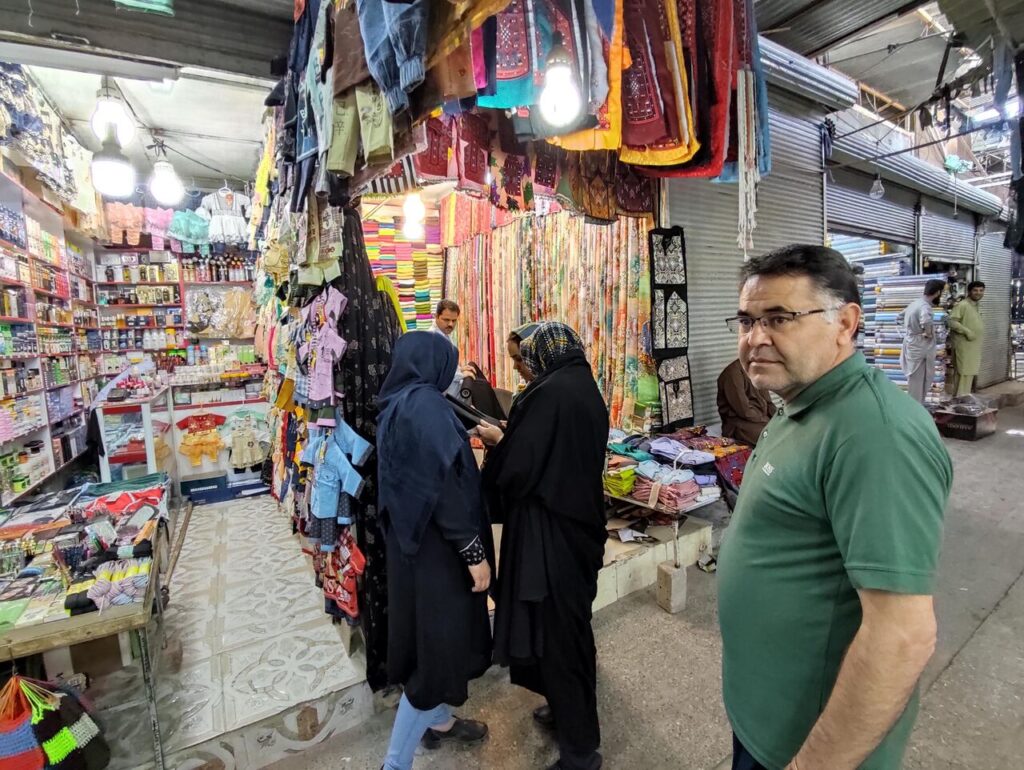
For now, millions of people across southern Iran remain in theirs. But what kind of home does the Iranian state—increasingly within the grip of the IRGC—intend the south to become when the fighting stops?
From Chabahar to Hormuz to Kharg Island, any Iranian government would regard the coastline as strategically important. An economist interviewed for this article argued that Iran’s security could ultimately depend as much on a prosperous coastline as on military installations. Economic opportunity, functioning infrastructure, and public confidence can themselves contribute to stability. Yet in a political system accustomed to viewing everything of consequence through a security lens, civilian investment is easily postponed while military expenditure is seen as permanently urgent.
The current war makes that logic more powerful. Ports damaged in the fighting can be rebuilt as commercial gateways or hardened as strategic assets. Restored roads can connect cities and markets or military supply networks. Coastal development funds can finance housing, water systems, and employment, or disappear into an expanding defense economy. Half-realized plans, like those for the North-South Transport Corridor, first agreed to with Russia and India in 2002, can finally reach fruition or fade away.
These choices are not new. The south did not become economically vulnerable because war suddenly interrupted an otherwise successful development project. It was drawn into the war after decades in which the wealth beneath its soil consistently mattered more to the state than the quality of life above it. Iran never treated the south as a place whose inhabitants deserved to share in the prosperity their region generates.
The maritime-economy project was supposed to change that. It offered, at least in theory, a different relationship between the Iranian state and its coast. Instead of using the south to support the rest of the country, here Iran would build its economic future.
The war may now determine whether that experiment ever really begins. Perhaps the government will rebuild ports, pursue the Makran strategy, attract outside investment, and finally direct resources toward the towns and communities that have existed next door to the country’s most valuable assets with little to no reward. Or perhaps reconstruction will become no more than a rationale for fortification. If so, the war will simply have returned the region to the role it has been assigned again and again: essential to the defense and survival of the Iranian state, crucial to the national economy, and still waiting for development to reach the people who actually live there.