Coronavirus: long pharmacy lines, scarce and costly medications
Vials of remdesivir are selling for as much as $250—almost two weeks’ salary for a typical Iranian.
Vials of remdesivir are selling for as much as $250—almost two weeks’ salary for a typical Iranian.
Bahram Einollahi among signatories of January letter calling for rejection of US and British COVID vaccines.
Filmmakers charge supreme leader with “mass murder” for blocking Western vaccines.
Twitter hashtag use climbs as deaths reportedly reach 30 an hour.
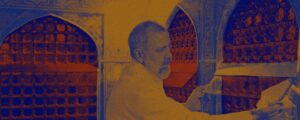
The custodians of Mashhad’s Imam Reza Shrine have turned the pilgrimage site into a political money machine.
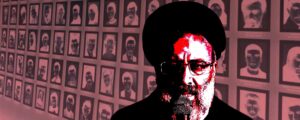
One of the central figures in Iran’s kleptocracy now heads its government.
Many teenagers said to be among those detained in Khuzestan Province protests.
Isfahan company sees employees walk out in protest at low wages.
Official tally is less than half that. Even the lower figure is a death rate over 3 times per capita of the US toll.
Riot police attack peaceful demonstrators in heart of Tehran, as anti-regime protests break out in more cities around the country.
Plan to block access to all “foreign messaging apps” and social media platforms wins legislative approval.
Protestors chant slogans against the supreme leader at the hub of the capital’s shopping district.
Demonstrations erupt in northwestern city; reports of rallies in the northeast and Kurdish city on Iraqi border.
Police respond violently, with continuous gunfire heard in Mashahr, Ahvaz, and Aligudarz.
Many demonstrators injured, arrested in western Iranian city.
Online videos show confrontations with paramilitaries in central city of Najafabad.
Government forces apparently using tear gas, potentially lethal pellet guns and rubber bullets against demonstrators.
Shouts of “Death to Khamenei” and “We don’t want the Islamic Republic” now heard at demonstrations.
Three demonstrators killed in Izeh according to online claims.
Many said to have been injured in Khuzestan capital and nearby city.
Exit taxes have yielded about $3.3 million for the state coffers.
Four protestors have allegedly been killed by police as of July 18.
Current Majles speaker oversaw transfer of 1,000 municipal properties to his wife’s charity when he was mayor.
Strikers are demanding the company’s owner be removed and the firm placed under state control.
According to a Tejarat News report, the sites involved comprise about 30% of the country’s mines.
Provincial hospitals have been dismissing patients after three days, regardless of condition, to demonstrate that they have empty beds.
The Islamic Development Organization of Iran, which reports directly to the supreme leader, introduces the Hamdam relationship app.
Supreme Leader Ali Khamenei has prohibited the import of any Western-made vaccines.
While residents of Tehran and other cities had no electricity for 8 hours, Khomeini’s mausoleum remained lit.
Police beat some protesting Isfahani farmers with batons.
Official statistics show that 60 percent of recent COVID-19 tests have come back positive.
Among Iranian vaccines, only the Barakat vaccine has received emergency production approval.
All government offices, judiciary facilities, and banks in the province will be closed as of July 3.
Iran’s former president took a thinly veiled swipe at the supreme leader, saying he feels sorry for the “person” who called the presidential election an “enormous victory.”
Since June 22, oil and petrochemical industry workers from across Iran have been participating in a general strike, uniting under the banner of what they are calling the “2021 Campaign.”
In protest at falling milk prices even as the price of livestock feed remains high, workers have been dumping the contents of milk containers onto the ground.
According to Khamenei, both write-in votes for disqualified candidates and the casting of blank ballots indicate people’s support for the current system.
In the Iranian legal system, no law provides for the transparency of presidential election campaign funding.
Since the 19th-century launch of Iran’s first newspaper, those seeking to challenge the official narrative have largely had to do so from abroad to evade government censorship.
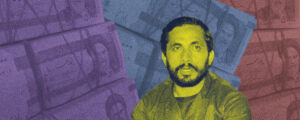
The former bonyad CEO’s network of “do-gooders” includes embezzlers and sex traffickers.
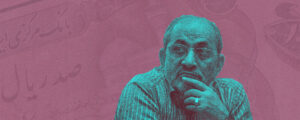
Eight scandals featuring the former bonyad exec’s business network.
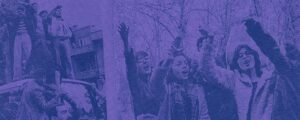
Photography helped propel the Iranian Revolution, and the Revolution helped push the boundaries of documentary photography in the country.

The règle du jeu of the Islamic Republic is lost on those with hope for reform.
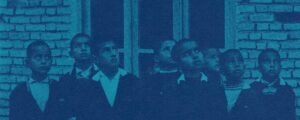
A rare documentary about media in 1960s Iran holds a message about reporting on the country today.
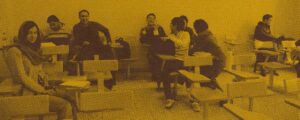
A personal reflection on studying at the journalism school in Tehran.
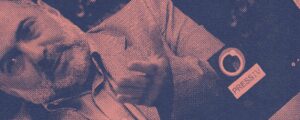
Is it news? Sort of. Is it propaganda? It wishes. Iran’s English-language web channel seems most intent on putting its audience to sleep.
The Islamic Republic’s own rampant censorship is breaking its media hold on the Iranian people.
The terms for journalist meant to thwart journalism in the Islamic Republic.
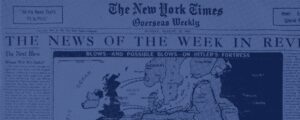
Before the international edition of the New York Times moved to Paris, it was distributed out of Tehran.