
Down to Their Last Shift
Low salaries and gender discrimination are driving Iran’s nurses from their jobs, impairing an already wobbly healthcare system.

Low salaries and gender discrimination are driving Iran’s nurses from their jobs, impairing an already wobbly healthcare system.

Regime-controlled security certificates could turn online banking access into an open door for surveillance.
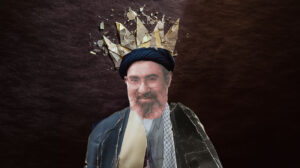
A new stipend for seminary students may herald a rise in religious status for the hidden Supreme Leader.

The Islamic Republic’s overreliance on oil sales to China exposes it strategically while the mass import of cheap goods undermines local industry.

Nearly a decade since Hassan Rouhani signed the treaty, the Majles is being pushed to formally approve it, even as major issues remain unresolved.

The country has no shortage of laws against financial wrongdoing. But it repeatedly fails to enforce them, while precious savings disappear.
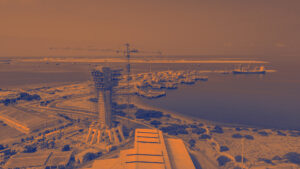
The southern coast provides oil, gas, ports, and strategic depth, while remaining poor. Tehran pledged to transform it with a new maritime economy.

Ali Khamenei’s profligate six-day funeral spotlights both new rifts in the IRI base and the seeming rise of the pro-regime “bihejab” girl.

Housing construction stalls, purchase prices climb out of reach for many amid Iran’s war-struck economy.

Cash-strapped Tehranis are skipping meals, selling assets, and buying basic goods on credit as prices soar and jobs vanish.

As millions sink into poverty and precarity rises for millions more, anger deepens.
An Iranian economist speaks with Tehran Bureau about the country’s postwar outlook and the Guards’ growing sway.

From Safavid coffeehouses to Instagram-era roasteries, Iranian cafés have been venues of commerce, performance, surveillance, and dissent.

Despite a tightening economic vise, the Islamic Republic still lavishes precious funds on self-promotion.

The military standoff over control of the crucial strait is mirrored by a statutory conflict that mocks international law.

Repeated internet shutdowns are breaking the digital economy millions depend on.

Affordability rather than availability is key threat to Iranians’ food security.

From surging inflation to supply chain disruption to industrial havoc, a crisis could be nearing its breaking point.

Mobarakeh Steel, reportedly targeted by both the US and Israel, plays an outsized role in Iran’s corruption-riddled economy.

The small island tells the story of oil wealth siphoned, culture sidelined, and a landscape steadily militarized in the name of security.

The former police chief and mayor likes getting his hands dirty in big projects. How will he exploit this turbulent moment to make his next move?

A closer look at the institutions and relationships underpinning the principlist politician’s influence

For years Mojtaba Khamenei operated in the shadows. Now he’s Supreme Leader. Here’s the empire behind him.

Tehran Bureau pursues its one-of-a-kind investigations into Iran’s bonyads and the Khamenei family. The articles here provide unparalleled detail about the clans that run the country’s political business empires.
A list of companies audited by Mofid Rahbar, an accountancy that exclusively services organizations overseen by Ayatollah Khamenei’s office, reveals nearly 200 private businesses linked to the regime. They include book publishing, banking and food-producing brands Iranians encounter on a daily basis.

The Supreme Leader’s Office and the large bonyads it oversees are involved in each step of the gasoline production process, from oil extraction to petrochemical production.

A Doublethink investigation digs up documents that show the Iranian government’s persistent neglect of Hepco’s privatization woes.
Doublethink research shows overwhelming government and bonyad ties with Iran’s “private” sector.
A rare move by U.S. Treasury acknowledges the economic over reach of Ayatollah Ali Khamenei inside Iran.

A rare glimpse into the workings of Iran’s economic system was provided May 4 by Mohammad Sarafraz, the former chairman of state-run broadcasting giant the Islamic Republic Institute of Broadcasting (IRIB).

Corruption is Khamenei’s way of controlling the government and seizing more power.

The Khameneis and their family members own or control Iran’s major newspapers, publishing houses, news agencies and cultural institutions.

An analysis of official data shows how top-performing companies are linked to bonyads, the government or both
Khamenei’s office puts up obstacles to transparency to protect its own interests
As Iran’s economy struggles, Khamenei’s office is founding new companies in tech, finance and pharma
An insider’s testimony about the genesis of bonyads and the dynamics of Iran’s pseudo-privatization.
Why this essential term must be redefined for an Iranian context.

A bill addressing the leading cause of corruption has languished in the Majles for over two years.

The lives, business interests, and influential connections of the late president’s five children.

The late president established a corrupt system that continues to benefit elite clans, including his own.

The late president’s youngest son and his wife, Maryam Salari, are at the heart of an extensive business network.
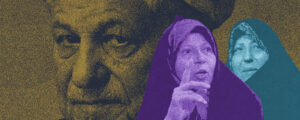
The two daughters of the late president have wide-ranging business interests, based in both inheritance and marriage.

The late president’s middle son, now serving a 10-year jail sentence, was mired in business scandals for decades.
Eggs, a common substitute for meat, now triple the average price Americans pay.
Soaring food prices primary culprit as inflation rate over past 12 months hits 50%.
Multiple job actions by teachers and petrochemical workers across the country.
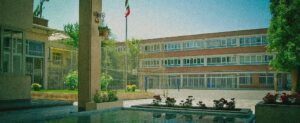
Despite his links to crime and corruption, Mohsen Rafiqdoust controls prestigious private schools.
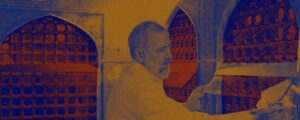
The custodians of Mashhad’s Imam Reza Shrine have turned the pilgrimage site into a political money machine.
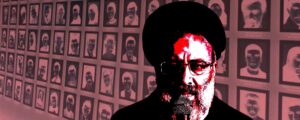
One of the central figures in Iran’s kleptocracy now heads its government.
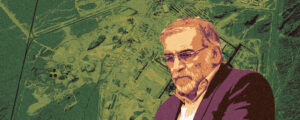
The supposed father of the feared “Iranian bomb” never published a scholarly work, but his family’s firms have done very well for themselves.